
Most business owners think customers choose based on price.
Sometimes that’s true. Most of the time, it isn’t.
From experience, customers usually follow a pattern. It’s not something they sit down and think through step by step, but it’s there in the background.
Once you understand it, a lot of things start to make more sense. Why some enquiries convert. Why others disappear. Why you lose work you thought you had.
Here’s what’s actually going on.
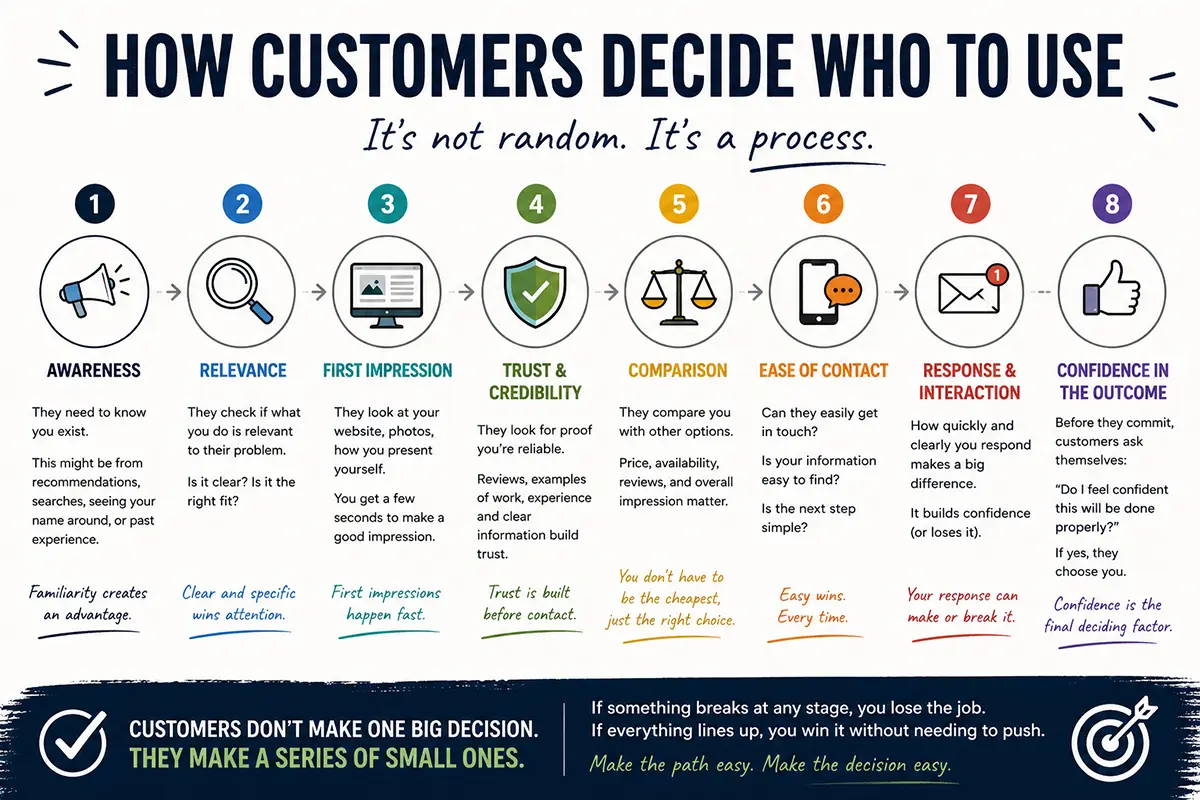
First, they need to know you exist
Sounds obvious, but it’s where most problems start.
If someone has never heard of your business, you’re already behind someone they recognise. That recognition might come from seeing your name a few times, hearing about you, or just coming across you before.
People are more likely to choose something familiar. Not because they’ve researched it deeply, but because it feels safer.
Then they ask, “is this relevant to me?”
Customers aren’t looking for a business. They’re looking for a solution to a specific problem.
They’ll quickly scan:
- Do you actually do what I need?
- Is it obvious?
- Does this feel like the right fit?
If they have to think too hard to work it out, they move on.
Clarity matters more than clever wording.
First impressions carry more weight than you think
When someone lands on your website or sees your business, they make a judgement quickly.
Not in detail. Just a general feeling.
Does this look professional?
Does it feel trustworthy?
Does it seem organised?
You don’t get long here. If something feels off or confusing, they’ll quietly drop away and look elsewhere.
Before they contact you, they’re already forming trust
Most customers won’t pick up the phone straight away.
They’ll look for reassurance first:
- Reviews
- Photos of work
- Clear explanations
- Signs you’ve done this before
They’re trying to answer one question without saying it out loud:
“Can I trust this person to do the job properly?”
If they can’t answer that, they don’t get in touch.
They’ll usually compare you to someone else
Even if they like what they see, most people won’t stop at one option.
They’ll check a couple of others. Not always in depth, but enough to get a feel.
At this point, it’s not about being perfect. It’s about being a sensible choice.
You don’t have to be the cheapest. You don’t have to be the biggest. You just need to feel reliable and easy to deal with.
Ease makes a big difference
This gets overlooked a lot.
If it’s hard to contact you, people won’t bother.
If they can’t quickly find your number, or your form is awkward, or they’re not sure what to do next, they’ll move on to someone else who feels easier.
People tend to go with the path of least resistance.
What happens after they contact you matters just as much
Getting the enquiry isn’t the win. It’s just the next step.
From there, they’re paying attention to:
- How quickly you reply
- How clear you are
- Whether you seem organised
A slow or vague response can undo everything that got them to contact you in the first place.
A clear, straightforward reply builds confidence quickly.
In the end, it comes down to confidence
Before a customer commits, they’re asking themselves:
“Do I feel comfortable going ahead with this?”
That feeling comes from everything they’ve seen and experienced up to that point.
If it all adds up, they go ahead.
If something feels off, even slightly, they hesitate or choose someone else.
The main takeaway
Customers don’t make one big decision.
They make a series of small ones:
- noticing you
- understanding you
- trusting you
- feeling comfortable contacting you
- feeling confident choosing you
If something breaks at any stage, you lose the job.
If everything lines up, you win it without needing to push.
That’s usually the difference.
Want more practical business advice like this?
If you enjoy our business advice and want to receive an email each time we publish, leave us your details below.