
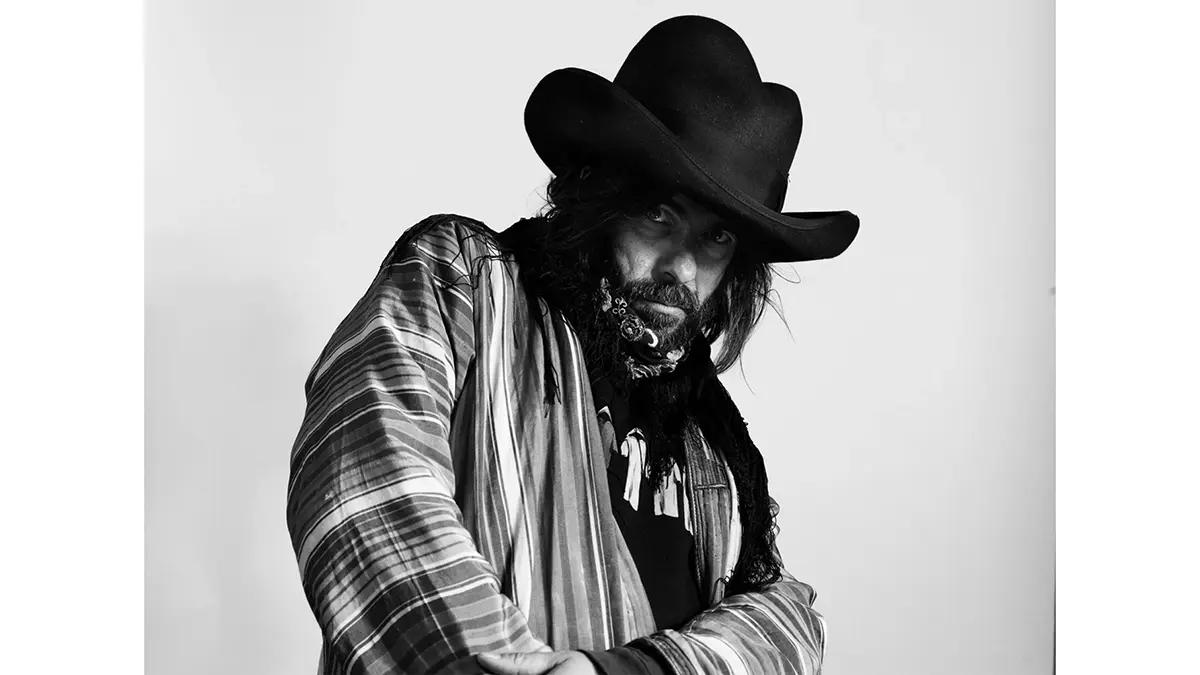
Artist, filmmaker and musician Firouz FarmanFarmaian is preparing to take his feature documentary PATH to the Madrid Film Festival, marking another milestone in a multidisciplinary career that spans cinema, contemporary art and music.
The documentary follows a journey across continents to realise a landmark cultural moment: the presentation of the first Kyrgyz Pavilion at the 59th Venice Biennale. The project also highlights the growing ambitions of FarmanFarmaian’s dedicated film division, reflecting his long-standing interest in exploring global narratives through art, culture and identity.
Recognised as Cultural Ambassadors to the Kyrgyz Republic during the 59th Venice Biennale, FarmanFarmaian and his collaborators have built an international reputation for work that moves fluidly between artistic disciplines and cultural spheres.
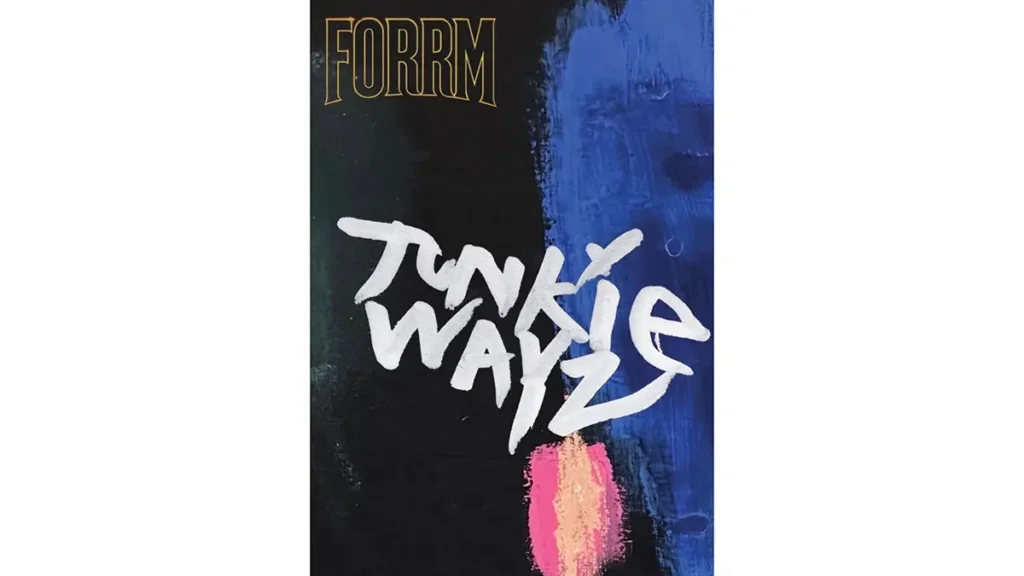
Alongside his film work, FarmanFarmaian recently unveiled “JUNKIE WAYZ”, the first single from BOUTIQUE, the forthcoming album from international psychedelic rock collective FORRM. Operating between Paris, New York and North Africa, the project blends psychedelic rock, electronic textures and cinematic atmospheres, drawing on the same creative impulses that shape his work in film and contemporary art.
In this exclusive interview, FarmanFarmaian discusses artistic freedom, the enduring power of culture, analogue creativity, and how his work across film, music and visual art continues to inform a singular creative vision.
You move fluidly between film, music, and contemporary art. Why do you think art still holds the power to shape culture and provoke real societal change today?
It’s about harnessing inner energies and turning them into form, not formatting discourse.
Genre can become a cage. It limits expression, creates dangerous stereotypes, and ultimately channels creativity into systems that are easier to package, control, and consume.
Good energy works differently. It exists in a constant flux between disruption and reconciliation, questioning the material while feeding the spiritual. The sparks generated by that friction have always nourished the societal agora, and they still can.
But first, one must confront fear, the cacophonous noise of nonsense, and the institutional machinery that too often mistakes conformity for culture.
As Dylan said: “Shoot a few holes, blow their minds.”
Your new single, JUNKIE WAYZ, feels deeply cinematic. When you create music, are you thinking visually from the start, or does the narrative emerge through sound?
The core movements of 20th-century literature, New Journalism, Surrealism, the Beats and their many offshoots, blurred the boundaries between image, sound, and written form.
That’s the terrain I inhabit.
I work at the juncture of those dynamics, sculpting poetics in space, regardless of medium. Whether it becomes music, film, text, or installation is almost secondary. The visual and sonic narratives tend to emerge together.
Artwork for “JUNKIE WAYZ”, the lead single from FORRM’s upcoming album BOUTIQUE.
FORRM blends psychedelic rock with electronic textures and score-like atmospheres. How do you approach building narrative through sound rather than lyrics alone?
Working on soundscapes for my installations freed me from market expectations.
I reset my approach by layering freeform electric guitar and pedalboard improvisations with tantric Indian tabla, Persian ney flute, synth textures, and spoken poetics.
That process led to the 22-minute track SHIMMER (FORRM NU FORRM, 2022), which I embedded into my Gates of Turan installation at the Kyrgyz Pavilion during the 59th Venice Biennale.
From there, I began conceptualising immersive “soundspheres” within my cinematic practice.
French writer-actor Jules Benchetrit recently described the latest draft of my upcoming feature film Season of the Witch as “a blues song.”
I like that.
You’ve described BOUTIQUE as an immersive sound piece rather than a traditional album. What was the original vision behind it, and how do you want audiences to experience it?
BOUTIQUE emerged organically.
While writing, recording, and designing the soundtrack for my docu-film PATH (2025), I found myself surrounded by exceptional musicians and open-minded producers between New York and the South of France.
Suddenly, I had a real band and great studios.
So rather than force an album, I let one emerge in its own time. Good music, strong production, and a freeform zone. Boutique style.
I’d like audiences to experience it as an immersive object rather than background content—something cinematic, tactile, and transportive.
The decision to release BOUTIQUE as a limited cassette is striking in a digital-first world. What does that tactile format add conceptually?
How much more boring can the digital affair get?
The vinyl resurgence says a lot. But now that you can order vinyl on demand through Amazon, perhaps it’s time to flash out the tapes.
Analogue all the way.
Your work often exists between places—Paris, New York, North Africa. How do these environments shape FORRM’s sonic identity?
The wiring and unwiring of cultural interactions often sparks my best work.
I’ve spent years immersed in Touareg desert rock, Moroccan Gnawa traditions, and North African trance structures. Those textures absolutely shaped BOUTIQUE.
At the same time, I’ve been closely following the rise of remarkable American jam bands like Goose and Pile of Dogs, artists building on the open-ended musical DNA of Phish and the Grateful Dead.
That cross-pollination excites me.
I say: let’s rock it and trip it out.
You collaborated with Eric Chedeville, known for working with major artists. How did that partnership influence the project?
Rico introduced me to the inner temple of French Touch production.
He explained how Daft Punk worked on Led Zeppelin’s Neve console for Homework, 100% analogue.
During the Playground Nightology years, we spent months behind that very console, wiring vintage preamps and synths, chasing sound with the kind of obsession Herbie Hancock or Quincy Jones might appreciate.
Looking for the grail.
That dedication to sonic excellence never left me.
Neither did the Juno-106.
There’s a strong sense of atmosphere and memory in your music. Do you see sound as a way of reconstructing emotional landscapes?
Absolutely.
In the preface to Michelangelo Antonioni’s Bowling Alley on the Tiber, a British critic describes Blow-Up as a return to abstraction.
That resonates deeply with me.
Thoughts and emotions are abstract architectures of light, rhythm, and memory. Music, painting, and cinema all have the power to reconstruct those inner landscapes.
That’s why they feel instantly intimate.
That memorial atmosphere, that emotional residue, is what we call feeling.
These are precisely the themes I’m navigating now as I prepare my first feature film.
You brought PATH from Berlinale to Madrid. How did the project evolve through those experiences?
The biggest lesson? Don’t compromise. Stick to the original uncut versions.
What’s next for FORRM after BOUTIQUE? Do you see the project expanding into film, installation, or live performance?
Ahead is now.
The full 2026 FORRM lineup is heading to the South of France next week for a three-week lockout between Bloom Studios in Saint-Tropez and Coxinhell Studios in Saint-Aygulf, culminating in a sunset performance on June 4 at Domaine de La Croix.
The goal is multi-layered.
We’re putting the final touches on BOUTIQUE in preparation for the final mixes, while recording and filming the live performance to create a limited-edition live release on Blu-ray and cassette, extending the project through the fall.
And in the interstices, we’ll be exploring sonic avenues for the soundtrack of Season of the Witch.
Everything connects.