

By Lee Thomas, All About the Blinds, Banbury
Blinds or curtains? When someone asks me which to choose, I usually ask what they want to change about the room. Is the afternoon sun making the telly hard to see? Do people walk right past the front window? Does the bedroom get light before you want to be awake? The answers help narrow the choice much faster than a stack of fabric samples.
I measure and fit window dressings in Banbury and the surrounding villages. A shallow recess, a radiator or a window that opens inwards can make an option you liked in a photo less practical at home. Here’s how I’d weigh up blinds and curtains room by room, and what I’d check before spending any money.
When blinds tend to make more sense
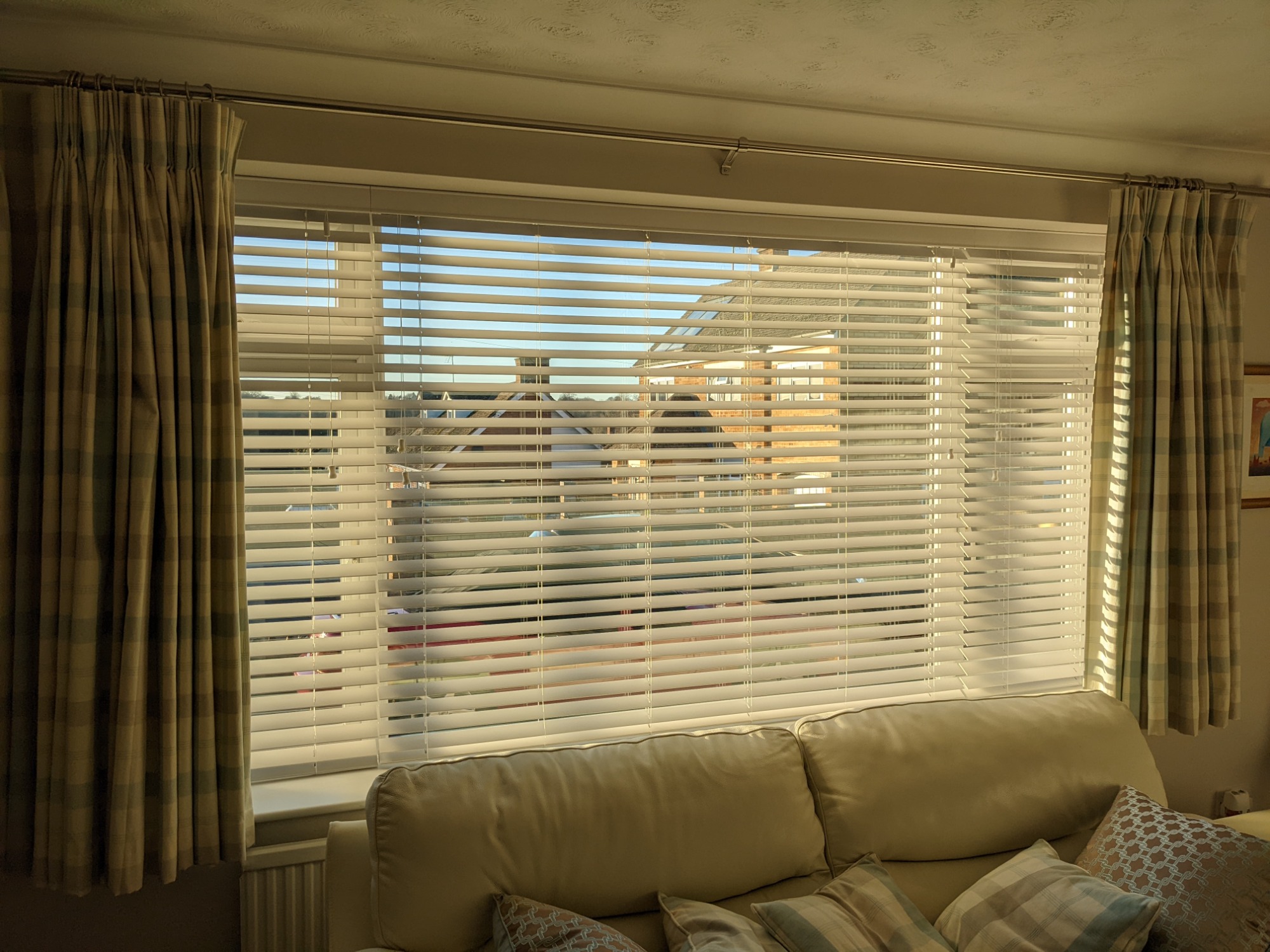
Choose blinds when you want to control the light throughout the day or keep the area around the window clear. Venetian blinds let you tilt the slats, which is handy when the angle of the sun changes while you’re working or watching television. A roller blind takes up little space when raised. A Roman blind gives you the softness of a fabric finish without curtains hanging on either side of the window, although the folds still take up some room at the top.
Check the window before deciding on an inside-recess fit. Look at how far the handles project, where any vents sit and how the window opens. A blind needs room to move without catching. If you want to keep plants on the sill or open the window with the blind partly down, tell whoever is measuring. It can affect both the type of blind and where we fit it. You can see the different designs in our guide to blinds in Banbury.
When curtains are worth choosing
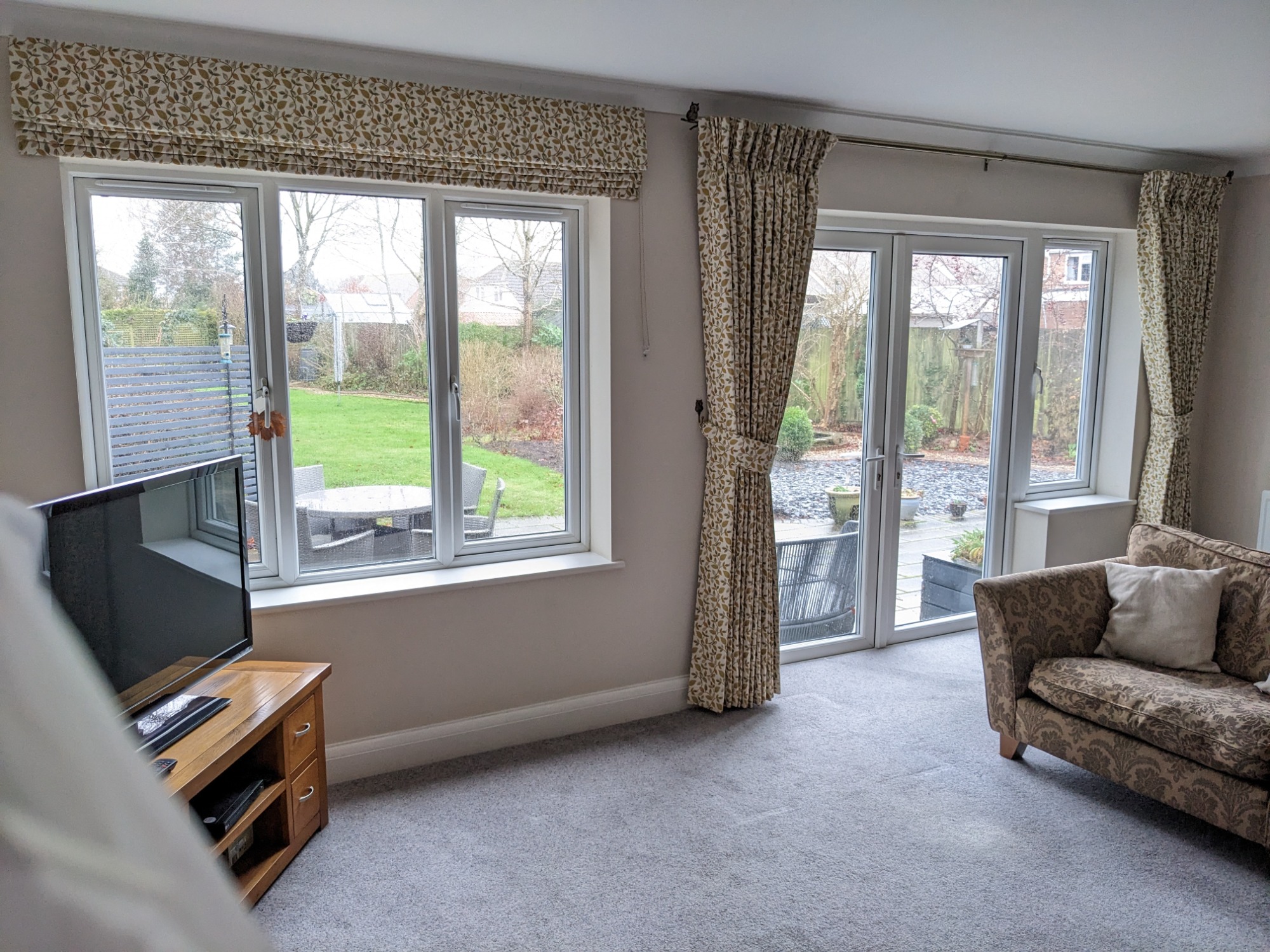
Curtains suit a room where you want fabric to be part of the furnishing. In a living room with hard floors and plain walls, they can soften the area around the window. Lined curtains are also worth considering if you want to cover a broad expanse of glass in the evening. Full-length curtains can look particularly good at a tall window, provided they won’t get caught under furniture or dragged across a busy walkway.
Think about where the fabric goes when you open the curtains. The more fabric there is, the more it takes up at either end of the track or pole. If there’s clear wall space on both sides, you may be able to draw the curtains back beyond the glass and keep more daylight. If one side is tight against a wall or cupboard, you may end up covering more of the window than you intended. Look at the whole wall rather than just measuring across the frame.
Living room: balance daylight with privacy
For a street-facing front room, I’d look at how much of the window actually needs screening. If it’s mainly the view from the pavement, tilting Venetian slats can give you more control than closing a pair of curtains in the middle of the day. Day and night blinds have alternating sheer and more opaque bands; moving them changes how much light and visibility you get. If you prefer the look of curtains, a voile can give you some screening in daylight, with lined curtains for the evening.
Don’t judge privacy by daylight alone. Turn the lights on after dark and look from outside if you can. A sheer fabric that works well when it’s brighter outdoors can be much more revealing once the light is on inside. Think about glare in the same way: sit where you usually sit and see which part of the window is causing it. That gives you a better idea of what needs covering.
Kitchen and bathroom: plan for steam and splashes
Above a sink or worktop, a blind often makes more sense because you can lift it out of the way. Ask which fabrics or slat finishes are suitable for moisture and how to clean them. A fabric you like in a living room may be awkward in a spot where it gets splashed regularly. Check how much cleaning the blind itself needs, too: a plain roller and a set of Venetian slats can be quite different to look after.
For a bathroom, put privacy first and check that you can still reach handles and open the window for ventilation. In a kitchen-diner, there’s no need to use the same window dressing everywhere. A practical blind near the sink and curtains by the dining table can work well together. You can tie them in with colour without asking the same fabric to do two different jobs.
Bedroom: look at where the light gets in
If streetlights or early mornings disturb your sleep, check where the light is coming from before choosing a replacement. Blackout fabric can block light through the fabric itself, but daylight may still get round the sides or over the top. Lined curtains with a generous overlap can help. If you need a darker room, I’d also look at a blackout blind screen with side channels and check how it fits against your particular frame.
Combining a blind and curtains is worth considering if you need daytime privacy as well as darkness at night. The blind can screen the window during the day, and the curtains can add coverage in the evening. Measure how far each fitting projects so they don’t clash. If you’re choosing a blind for a child’s bedroom, ask about cordless options or suitable child-safety fittings at the same time.
Bay windows and patio doors: measure how you use them
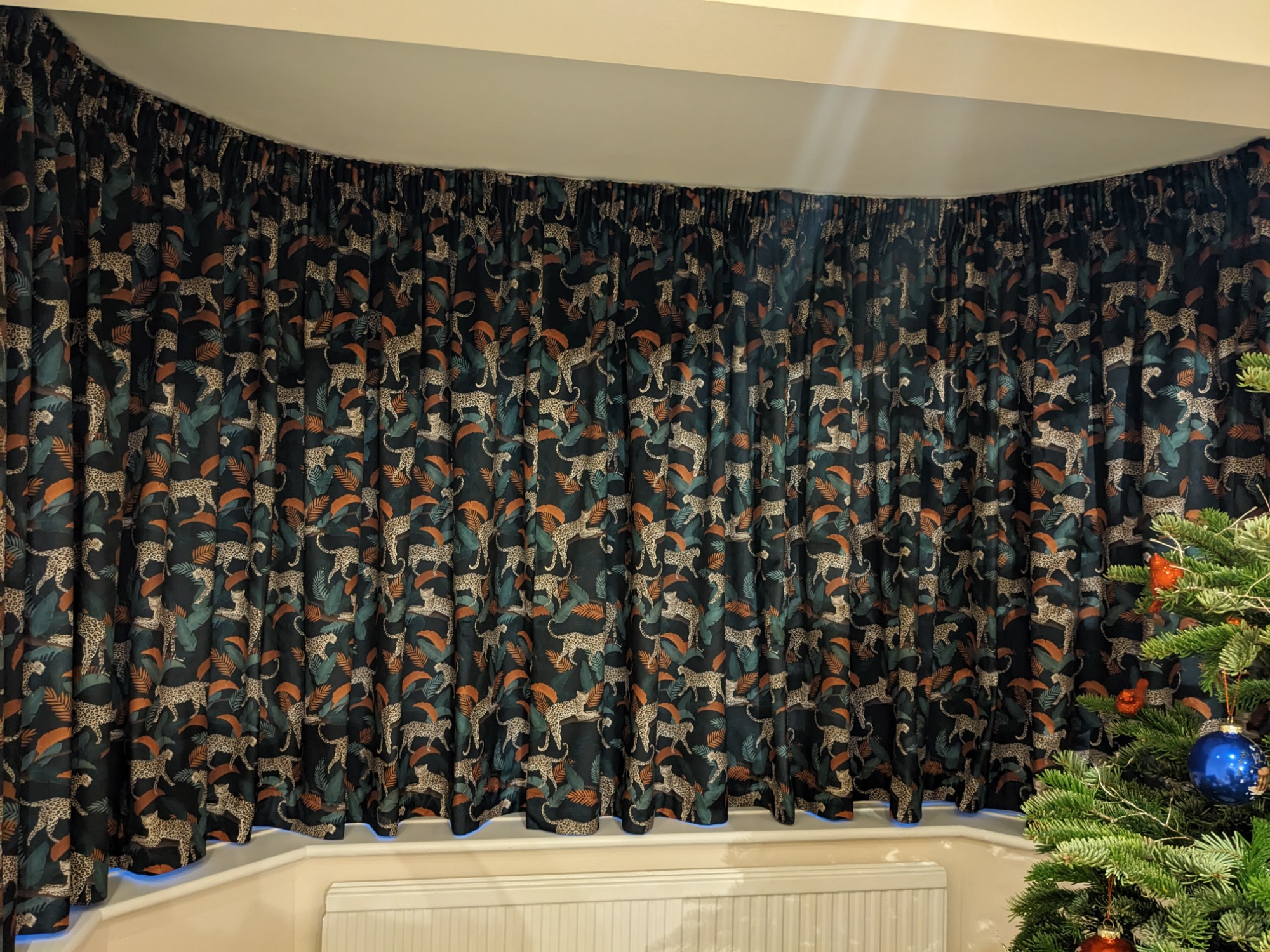
On a bay window, one pane might get direct sun while the others bring in useful daylight. Separate blinds let you adjust each section on its own. Curtains on a track that follows the bay can make it feel like one feature, but check where the curtains will sit when open. If they bunch in front of the end panes, you may lose more daylight than you expected. On an angled bay, the depth and position of the fixings matter as much as the width of each pane.
With patio or bifold doors, start by opening the door the way you do every day. Check the path of the handle and where the panels fold or slide. Will the blind have to be fully raised every time you go outside? Is there somewhere for curtains to sit without getting trapped or blocking the opening? I’d rather answer those questions during measuring than after the fittings are in.
Taking a first measurement? Start with the fixing position
A rough width and drop can help when you’re comparing options, but I wouldn’t order from a single measurement. Check the width at the top, middle and bottom of the recess and note where you want the brackets or track to sit. If the measurements differ, keep all three rather than averaging them. An older bay or a freshly tiled bathroom can look square until you put a tape across it.
Before ordering, check whether the supplier wants the opening size or the finished blind size. The allowance for a recess fit depends on the product and the supplier’s instructions. Measuring yourself to save on the quote is only worthwhile if you’re measuring for the exact fitting you plan to buy.
A quick check before you order
- Pick the main job. Is it daytime privacy, less glare, a darker bedroom or simply a softer finish?
- Check the room at two different times. Daylight and evening lighting can change how a fabric looks and how much people can see through it.
- Open the window fully. Note handles, vents, radiators, furniture and anything else that sticks out.
- Look at a sample in the room. Hold it against the window and then nearer the wall or furniture it needs to sit alongside.
- Compare what’s included in the quote. Check the lining or finish, the track or brackets, measuring and fitting. If you already have something you like, ask whether it can be cleaned, upgraded or refitted instead of replaced.
My rule of thumb is to start with blinds where space is tight or you want to adjust the light throughout the day. Start with curtains where you want a softer finish and have room for the fabric to draw back. If a window has two distinct jobs, such as daytime privacy and a darker bedroom, it can make sense to use both. Work through each room separately rather than making one choice for the whole house.
If you’re weighing up options for a home in or around Banbury, I’m happy to help you compare samples at the window. At All About the Blinds, we can measure, supply and fit, or help with just measuring or fitting if you already have a product in mind. Book a free home visit, call me on 07727 043871 or email hello@allabouttheblinds.co.uk.