

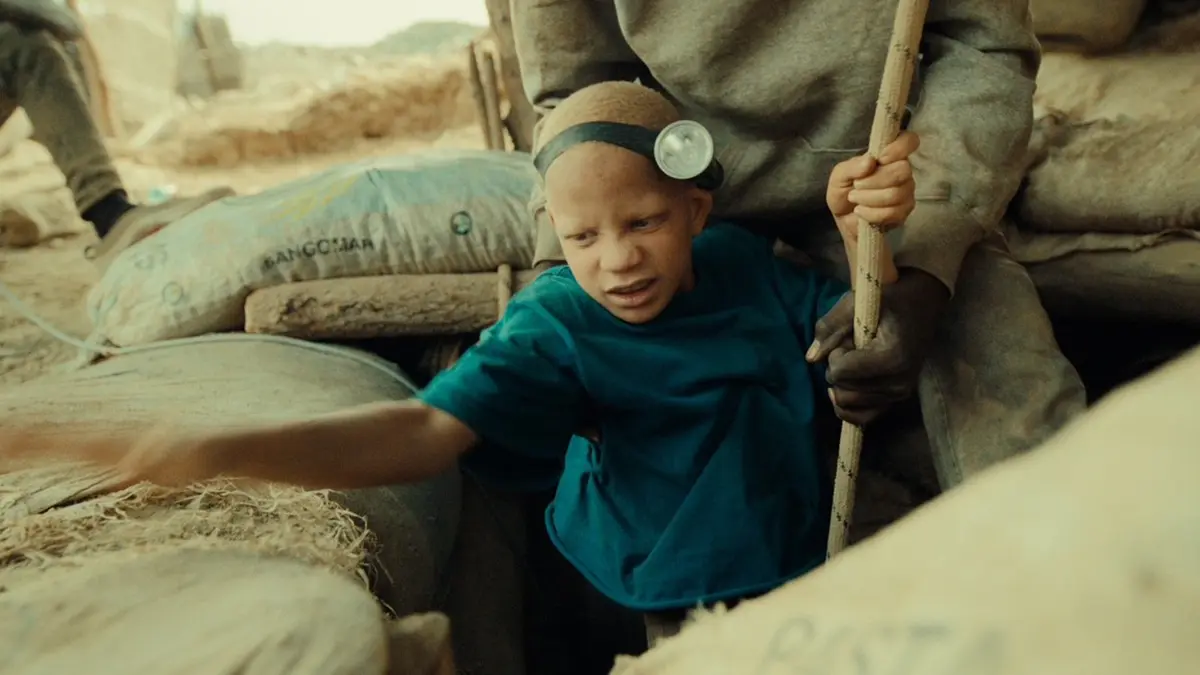
The Academy unveiled its 2025 Oscars shortlists on Tuesday, with the Live Action Short Film category once again proving itself a space where cinema seeks to move hearts as much as it provokes conscience. United by themes of injustice, inequality, and perseverance, the 15 shortlisted films offer intimate portraits of human struggle across cultures and continents.
Among the standouts is The Boy with White Skin (2024), in which French filmmaker Simon Panay continues his meticulous, near-anthropological examination of Africa’s gold-mining communities. I had the opportunity to speak with Panay in October about the 15-minute short, which centres on an albino boy left in the care of a group of miners by his father. Within the mine, the child’s presence and voice is believed to possess mystical power, invoked in rituals meant to shield the miners as they risk their lives in pursuit of gold.
Hovering delicately between stark realism and myth, the film immerses viewers in a world where superstition and survival are inseparable, and where belief becomes both a refuge and a necessity. The short’s resonance has already carried it far: more than 60 festival selections worldwide, including the France Télévisions Grand Prize at Clermont-Ferrand, the Breaking Boundaries Grand Prize at Rhode Island, Best European Short Film at Flickerfest, and Best Narrative Short (Oscar-qualifying) at Balinale.

When asked about the possibility of Oscar recognition while the film was still in qualification, Panay allowed himself a rare moment of reflection. “I’ve wanted to make films since I was ten,” he said with a smile. “Of course, I don’t do it for awards, but I’d be lying if I said it isn’t a dream. For the whole team, it would mean everything.”
Now, as of this month, the short is officially part of the Oscar shortlist, and it is easy to see why, having experienced it. The Boy with White Skin transcends the boundaries of cinema in a mesmerising exploration of humanity’s deepest fears and beliefs, where legend and truth intertwine. With remarkable vision and sensitivity, Simon Panay affirms his place among the most compelling filmmakers of his generation.
Much of Panay’s filmography has been rooted entirely in Africa’s gold mines. “I felt like I’d only scratched the surface of this world,” he says, recalling his early work. His first short, the documentary Nobody Dies Here (2017), observed life in the illegal Perma Gold Mine, Benin, where men dig for months, hoping to strike it rich or die trying.
The shoot ended abruptly after just eight days when Panay was threatened with arrest by local authorities. The film nonetheless went on to win several awards, including Best Documentary and Best Human Rights Film at the Open Window International Film Challenge.
Rather than deter him, the experience deepened his fascination. His next project, the feature-length documentary If You Are a Man (2023), took over five years to complete, including two years of immersive research at Burkina Faso’s Perkoa Gold Mine. It followed a young boy working in the mines to afford his school fees. “It’s a very unknown place with its own rules and beliefs,” Panay explains. “What I witnessed while making If You Are a Man is much of what you also see in The Boy with White Skin.”
For Panay, these mines are ecosystems governed by mythology as much as by economics. “The miners treat gold as a beast; something to be hunted,” he says. “From that, they create their own hierarchy, as if they’re soldiers on a battlefield.”
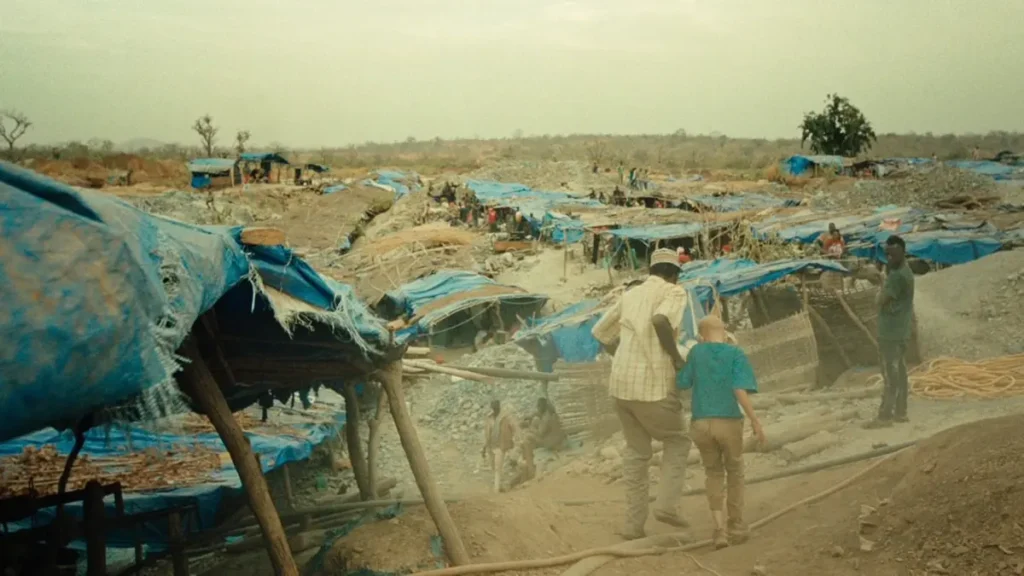
Though Panay’s past films have been grounded in nonfiction realism, The Boy with White Skin signals his emergence into myth-touched fiction. Under Bandini Films’ meticulous guidance, the short takes on a lyrical, dream-suspended quality, with each frame sharpened with intention and each silence humming with mystery.
The boy’s descent from the glazed, forgiving light of the upper world into the monolithic black of the mine feels almost liturgical; an initiation, a quiet pilgrimage into shadow. What begins as a physical journey becomes something metaphysical: a shedding of innocence, a metaphor for stepping into the unknown depths of self and myth. The mine is not mere earth but a cathedral of darkness, and he enters it as both witness and sacrifice. The film unfolds like whispered poetry; otherworldly, reverent, and charged with a tension that pulses beneath its ethereal calm.
Reflecting on this, Panay stated that he chose to “cross the line into almost science fiction,” allowing it to inhabit a space between reality and legend. But he insists that fiction was the only way to tell this story truthfully. “If I had filmed it as a documentary,” he says, “I would have shattered the illusion and the beliefs that this entire culture thrives on.”
The miners’ faith in the boy’s voice becomes the spine of the film’s mythology. His singing, believed to keep them safe underground, turns him into both a talisman and a prisoner. “It’s their version of a canary in a coal mine,” Panay notes. “They listen to him for signs from the world beyond.” The result is a story that unfolds like a fever dream, rooted in authentic detail yet pulsing with something metaphysical.
Though The Boy with White Skin drifts toward the mythic, it never abandons the tactile truth of Panay’s documentary instincts. Visually, Panay carries his nonfiction discipline into a fictional world with striking restraint. The camera stays close, almost claustrophobically so, tracing the boy’s passage through tunnels and narrow shafts; we move as he moves and breathe where he breathes. “I wanted to make the audience feel as close to him as possible,” he explains. “The wide lens, the lack of cuts, creating a connection you can’t fake.”
Light becomes the film’s most expressive instrument. The opening arrives in the searing, indifferent glare of the desert; an upper world washed in a heat that feels both sacred and punishing. Then, like a plunge into mythic underworlds, we fall into true darkness. Underground, illumination is rationed to the faint flicker of headlamps; faces and gestures appear and vanish, existence reduced to slashes of light cutting through the void. “We agreed early that it had to be real darkness,” Panay notes. “You lose people for seconds at a time. But those flashes, when they land, give you the world. If the timing was off, the scene was gone.”
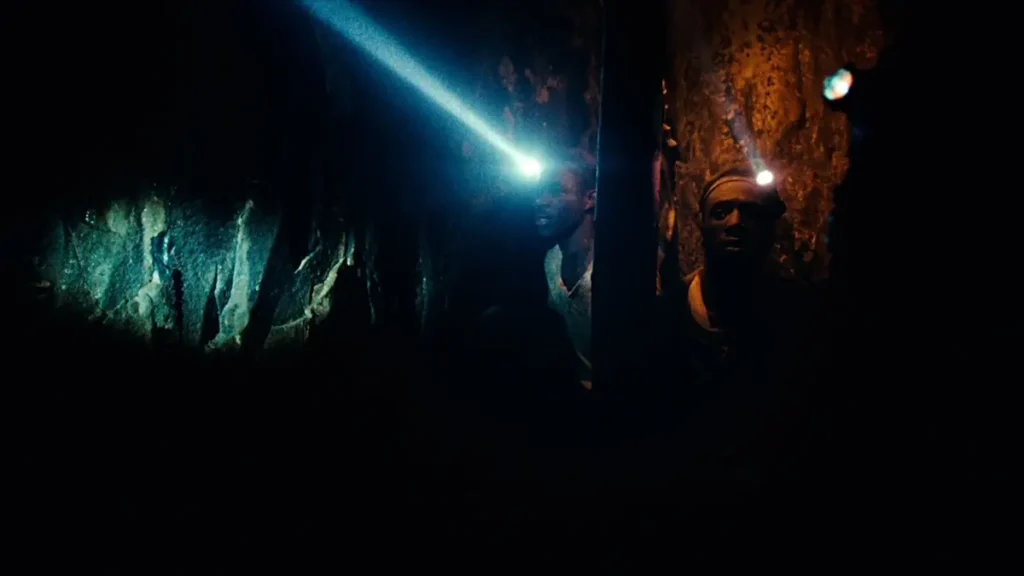
The effect is a hypnotic disorientation of part documentary immersion, part otherworldly descent. The mine becomes both a literal and symbolic space: a real tunnel carved by labour and history, yet also a cavern of myth, fear, and initiation. The boy’s journey may feel speculative, almost futuristic in its sparse ritualistic starkness, but the bodies, the breath, the dust remain unmistakably real.
Moreover, the film’s thematic undercurrent invokes deeper meaning alongside its artistic wonder. As well as Bandini Films, the short is produced by Astou Production in Senegal, an outfit known for championing African stories told with unvarnished honesty and cultural depth. This collaboration grounds the film in a lineage of narratives shaped not only by myth, but by history and lived experience.
Within the film’s quiet, reverent descent into darkness, echoes of real-world extraction reverberate. Panay draws inspiration from the global “blood diamond” economy and the shadowy laundering of African gold through networks in Dubai, where smuggled ore is melted down, reborn, and ushered into the world as pure and legitimate. The cycle, he suggests, is a familiar one—old colonial appetites wearing modern clothes, wealth again carved from the hands and soil of those left unseen. “It’s the same system of exploitation,” Panay notes. “Different material, same story.”
Yet Panay refuses the simplicity of moral assignment. His gaze remains observant, never prescriptive. “The film doesn’t push a message,” he says. “It’s not my job to judge, only to observe.” Still, the truth sits like ore beneath the surface. “The gold industry is a dirty one,” he admits. “There are links to terrorism, child labour, and money laundering. You can’t tell these stories honestly without acknowledging that.”