
When work slows down, many businesses instinctively start looking at their pricing. It is an understandable reaction. If enquiries feel quieter than usual, lowering prices can seem like the quickest way to create momentum again. Sometimes it works. Sometimes it works very well.
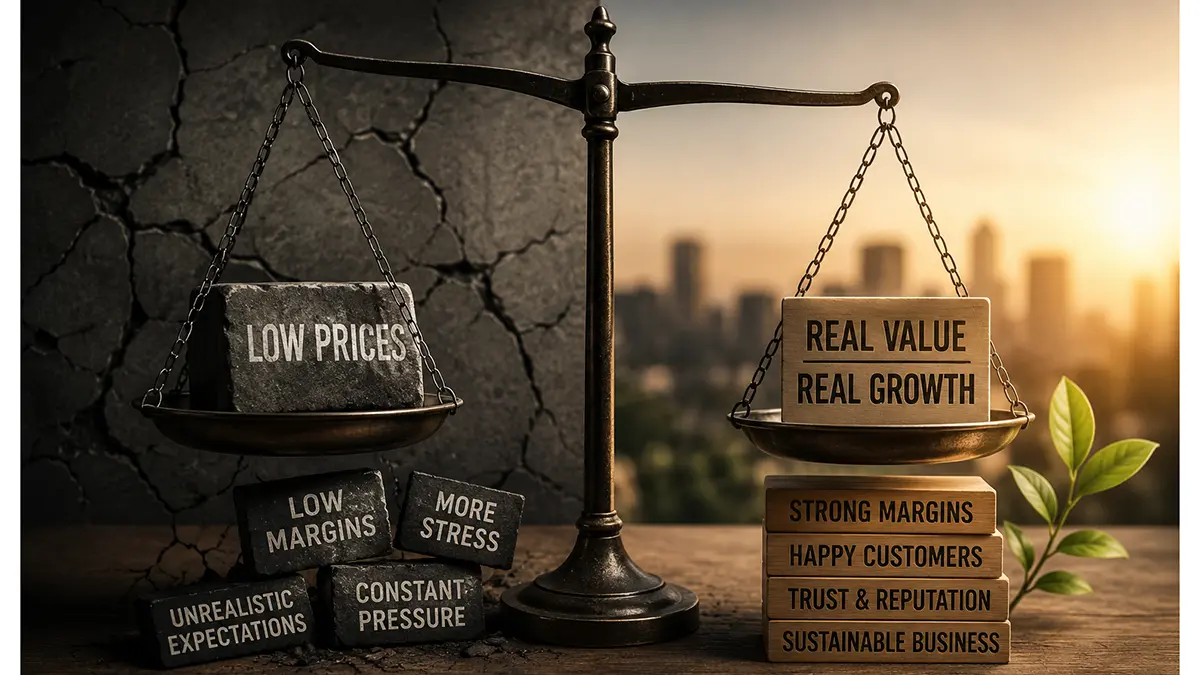
But pricing decisions rarely affect just sales. They affect the type of customers a business attracts, the expectations people have, the pressure placed on the business internally, and ultimately whether the business becomes sustainable long term. That is why lower pricing can either help a business move forward or quietly push it into a cycle that becomes difficult to escape.
A lot depends on why the prices are being lowered in the first place.
Lower Prices Can Help Early On
In the early stages of a business, competitive pricing can absolutely make sense. When customers have never heard of a business before, there is naturally more hesitation. People do not yet know whether the service will be reliable, whether communication will be good, or whether the work will actually meet expectations.
At that stage, slightly lower pricing can help reduce perceived risk. It can help generate early enquiries, build reviews, create examples of completed work, and start building familiarity in the market. It can also help during quieter periods where maintaining workflow matters more than maximising margins.
There is nothing wrong with using pricing strategically. The problem usually starts when lower pricing stops being a short-term decision and slowly becomes the identity of the business itself.
Once customers begin choosing a business mainly because it is cheaper, the conversation changes. The business is no longer competing on reliability, communication, reputation, or experience. It is competing mainly on price, and that becomes very difficult to sustain long term.
Customers Don’t Usually Choose on Price Alone
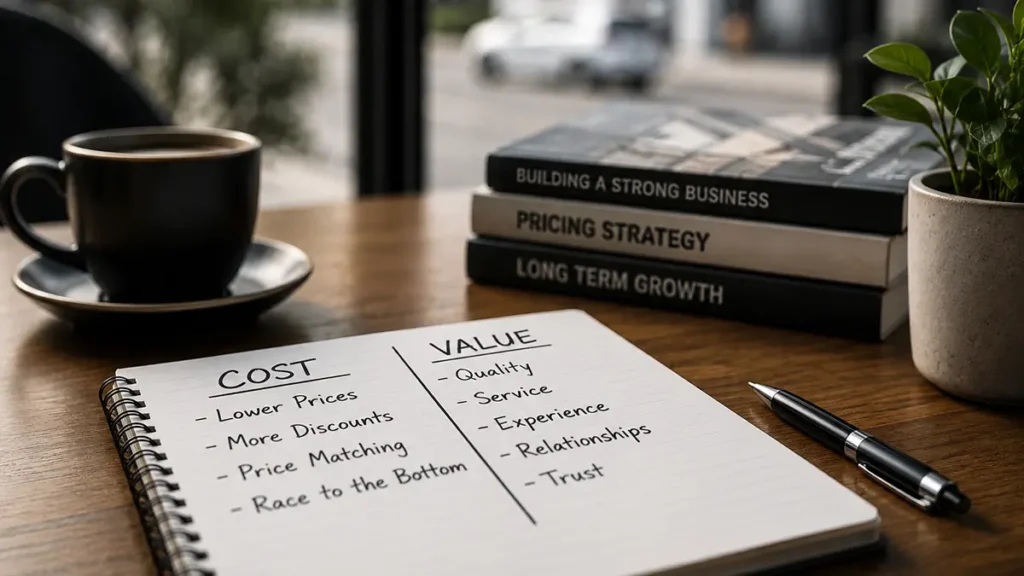
Many businesses assume customers are mostly driven by cost, but in reality most customers are trying to reduce risk. This becomes especially obvious in service-based industries.
When somebody hires a builder, accountant, mechanic, electrician, cleaner, or contractor, they are not simply paying for a task to be completed. They are paying for reassurance. They want to feel confident that the work will be done properly, communication will be straightforward, problems will be handled professionally, and they will not regret the decision later.
That is why trust often matters more than price.
A business that appears organised, reliable, experienced, and easy to deal with will often outperform a cheaper competitor because customers feel safer choosing them. Most customers will never openly say it, but pricing influences perception far more than people realise.
If pricing feels unrealistically low, people naturally start wondering whether something is missing. They question the quality, the experience, or whether problems are likely later. That does not mean expensive automatically equals better, but it does mean perception matters.
People naturally associate pricing with expectations. Higher pricing often creates assumptions around professionalism, reliability, and service quality, even before a customer has spoken to the business directly. Fair or unfair, those perceptions influence decisions every day.
Cheap Pricing Often Creates Expensive Problems
Lower pricing can absolutely increase enquiries in the short term, but the bigger question is what happens afterwards. Many businesses slowly drift into a position where they need more and more work simply to maintain the same level of income. Margins tighten, pressure increases, and time becomes compressed.
From the outside, things may still look successful because the diary is full, but being busy and being healthy are not always the same thing. Some businesses end up constantly working, constantly under pressure, yet still struggling to create genuine stability behind the scenes.
Over time, that pressure affects everything. Customer service becomes harder to maintain, communication becomes rushed, and attention to detail starts slipping. Owners become reactive because most of their energy goes into keeping up with workload rather than improving the business itself.
This is one of the reasons many experienced businesses eventually stop competing aggressively on price. They realise lower pricing often creates pressure far faster than it creates stability.
That does not mean businesses should overcharge or ignore market realities. Pricing still needs to feel fair and competitive. But there is a major difference between offering fair value and constantly racing to the bottom.

Strong Businesses Build Confidence
The businesses that tend to perform strongest long term are rarely the ones trying hardest to be the cheapest. They are usually the ones that become trusted, familiar, reliable, and consistent over time.
That familiarity matters more than many businesses realise. People naturally feel more comfortable with businesses they recognise and have seen consistently over time. Familiarity builds confidence, and confidence reduces hesitation.
Eventually strong businesses reach a point where customers stop asking, “Why are they more expensive?” and start asking, “Why are they so much cheaper?”
That shift normally happens when a business has built enough trust and consistency that customers stop judging it purely on price. At that stage, customers are buying far more than a product or service. They are buying confidence in the outcome.
Lower prices can absolutely help in the right situations, particularly when building momentum early on or introducing a business to new customers. But problems usually begin when lower pricing becomes the main reason customers choose the business in the first place, because customers who buy purely on price will often leave for the exact same reason.
Most successful businesses eventually realise they are not simply selling a service. They are selling reliability, communication, professionalism, consistency, and peace of mind.
Price will always matter. But in many industries, it is only one part of a much bigger decision.
Want more practical business advice like this?
If you enjoy our business advice and want to receive an email each time we publish, leave us your details below.