

A festival of football is on its way this summer as part of the EURO 2024 across Germany.
The 17th European Football Championships will kick off on June 14th, spread across the fanatic football lands of Germany.
Encompassing one calendar month, 10 different venues – from Hamburg in the north-west to Munich in the south-east – and the promise of delight, delirium, devastation and drama at every turn, it marks the second major tournament Germany has hosted in 18 years.
As England and Scotland fans prepare for 30 days of drama – we hope – here are the cities that will showcase one of the planet’s finest festivals of football.
Berlin
Berlin, Germany’s vibrant capital, melds historical significance with a pulsating cultural scene. Known for the Brandenburg Gate, Berlin Wall remnants, diverse cuisine, and dynamic arts, it’s a hub of innovation and history.
The Olympiastadion is the largest stadium for Euro 2024, with a capacity of 71,000, and will host the final.
Cologne
The historic city on the Rhine, Cologne is known for lively festivals, ancient Roman relics, vibrant art scenes and the location of Germany’s most frequented landmark, the Cathedral Church of Saint Peter.
FC Köln’s Cologne Stadium seats 43,000 and was updated to accommodate 2006 World Cup games, in addition to hosting NFL and ice hockey matches and music concerts.
Dortmund
Dortmund is in the Ruhr region and has transitioned its industrial roots to a tech hub over the past five decades. It’s celebrated for its energetic events, extensive parks and the German Football Museum’s rich sports heritage.
In football terms, Dortmund is famed for iconic Yellow Wall terrace at the 62,000 capacity BVB Stadion Dortmund, one of the most prestigious stadiums in global football.
Düsseldorf
In the cosmopolitan heart of North Rhine-Westphalia stands Düsseldorf, dazzling with avant-garde architecture, the renowned Königsallee shopping boulevard and the longest bar in the world.
The Düsseldorf Arena accommodates over 47,000 spectators, serving as the base for German second tier side, Fortuna Düsseldorf.
Frankfurt
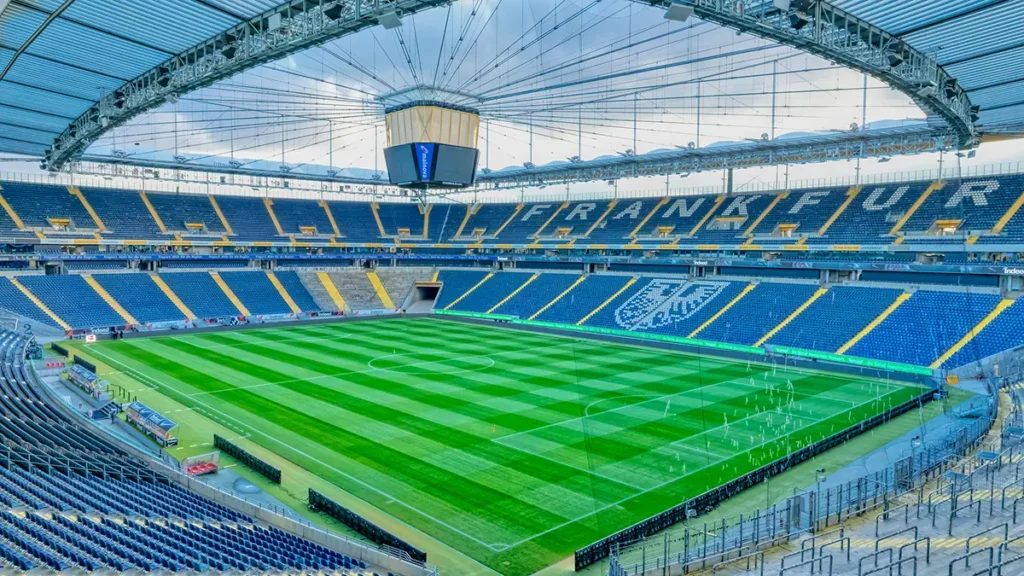
Frankfurt – Germany’s financial nucleus – is a blend of futuristic skyline, historic Old Town and cultural richness. Known for its bustling airport, world-class museums and the iconic Frankfurt Book Fair, it’s a city of contrasts.
The Frankfurt Arena was constructed in 1925, houses 47,000, and is the home of Eintracht Frankfurt.
Gelsenkirchen
Gelsenkirchen, nestled in Germany’s Ruhr Valley is renowned for its deep industrial traditions, vibrant culture and football fervour.
Opened in August 2001, the Arena AufSchalke serves as the venue for Schalke, the seven-time German champions, and boasts a retractable roof and a slide-out pitch for 50,000 fans.
Hamburg
Germany’s port city, Hamburg, is known for its maritime spirit, historic Speicherstadt warehouse district, bustling harbour, renowned fish market, and the majestic Elbphilharmonie concert hall.
Unveiled in 1953, the Volksparkstadion Hamburg was renovated in 2000 and can hold 49,000. It was used for matches during Euro 88, as well as the 1974 and 2006 World Cups.
Leipzig
Leipzig is a dynamic city in eastern Germany, boasting a rich cultural heritage, lively arts scene, significant architecture and a strong musical legacy, including Bach’s influence.
Leipzig Stadium – the home of RB Leipzig – opened its doors in 2004 with a modern roof, constructed within the framework of the old Zentralstadion — the largest stadium in former East Germany.
Munich
Bavaria’s capital Munich melds opulent history with modern flair, famed for Oktoberfest, stunning architecture like the Neuschwanstein Castle, effervescent art scenes, and technological innovation.
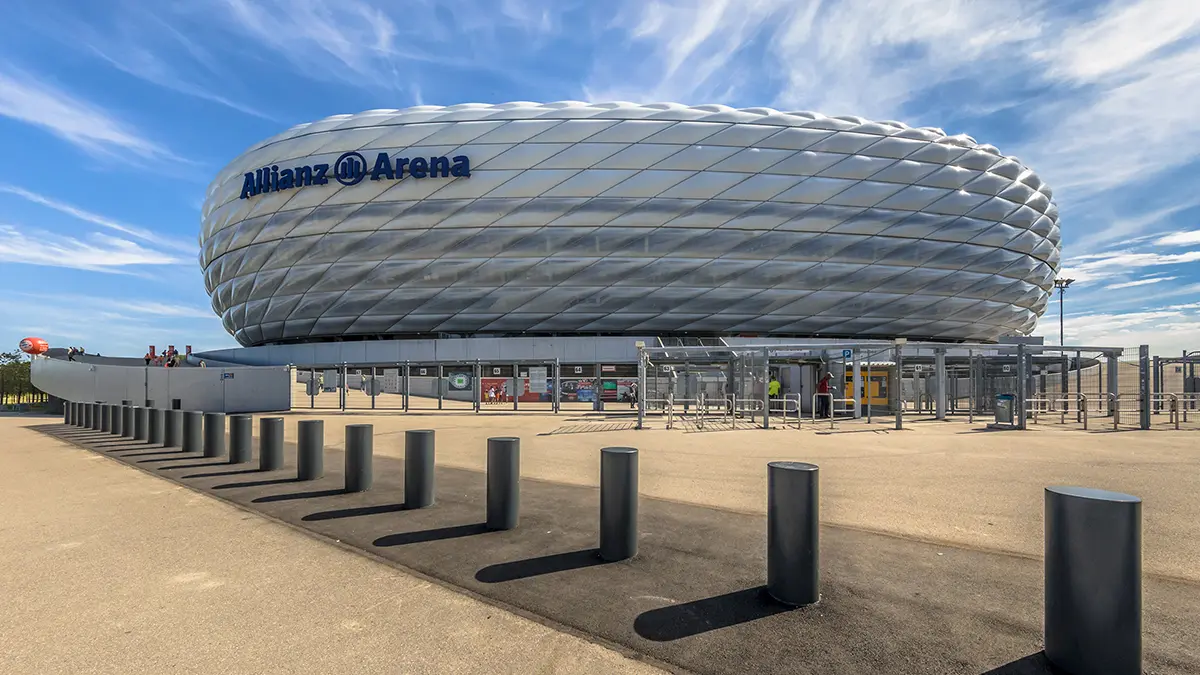
Constructed by Bayern and 1860 München, the Munich Football Arena was inaugurated in 2005. Bayern have since assumed complete ownership of the 66,000 stadium.
Stuttgart
Finally, part of Germany’s southwestern vineyard-covered hills, Stuttgart is known for its automotive industry, housing Mercedes-Benz and Porsche, plus artistic institutions, lush green parks and a superb food and wine scene.
Since construction in 1993, the 51,000-capacity Stuttgart Arena has undergone regular improvement and played host to matches during 2006 World Cups.
EURO 2024 across Germany the excitement is building