

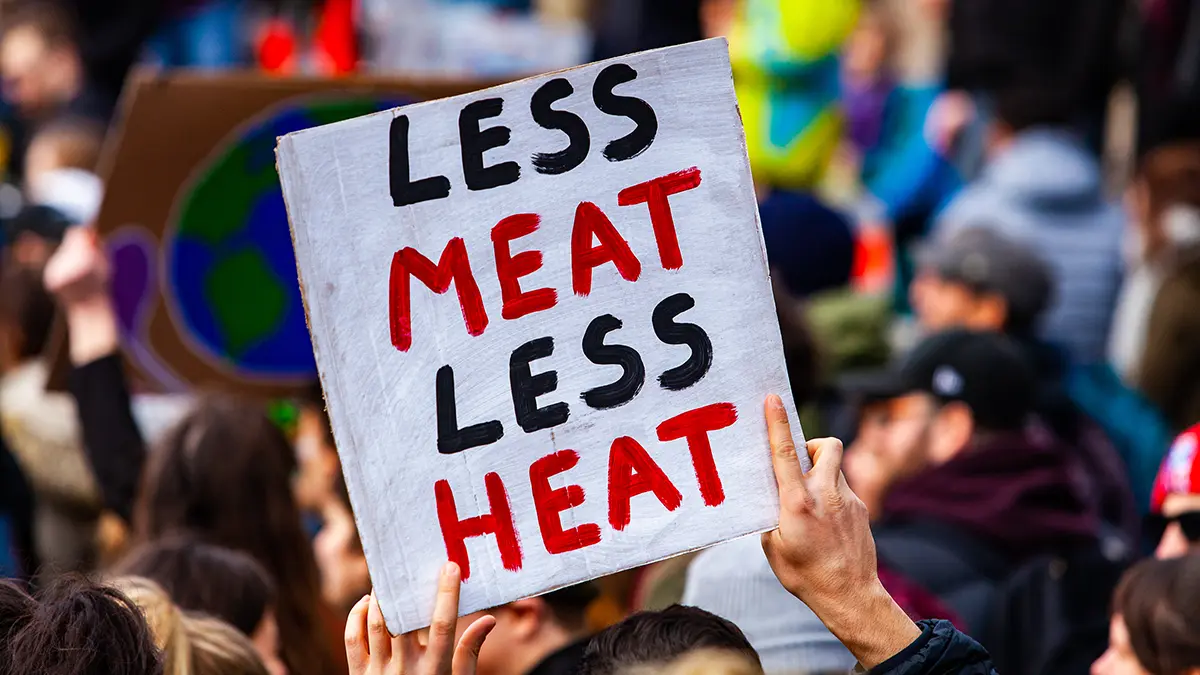
You recycle religiously, walk wherever possible, and opt for UK holidays instead of long-haul flights. And yet, it still feels like there’s always more to do when it comes to protecting the planet. The good news? One simple change — eating less meat — can have a significant positive impact on the environment. It’s a shift that doesn’t require expensive lifestyle changes or new technology. Just a little more awareness on your plate.
The Link Between Meat and Climate Change
Eating less meat helps reduce greenhouse gas emissions — one of the biggest contributors to climate change.
According to the Food and Agriculture Organization (FAO), livestock farming is responsible for roughly 14.5% of all human-induced greenhouse gases. That’s more than the emissions produced by every car, train, ship, and plane on Earth.
Why? Because animals like cows and sheep produce methane, a greenhouse gas that is over 25 times more potent than carbon dioxide. They release this gas as part of their natural digestive process — and then there’s the manure, which produces nitrous oxide, another major warming agent.
By eating less meat, we reduce the demand for livestock farming. That means fewer emissions and less strain on the environment.
How Livestock Farming Drives Deforestation
Another compelling reason to cut back on meat? Land use.
- Livestock farming needs vast areas of land — both for grazing and for growing animal feed crops.
- Forests, wetlands, and natural habitats are often cleared to make room.
- This contributes directly to deforestation, biodiversity loss, and reduced carbon capture.
In fact, the World Resources Institute reports that 80% of the world’s agricultural land is used for livestock, but it provides only 18% of global calories.
Eating less meat can reduce pressure on land, helping to protect ecosystems and slow the destruction of forests — which we desperately need to absorb carbon dioxide from the atmosphere.
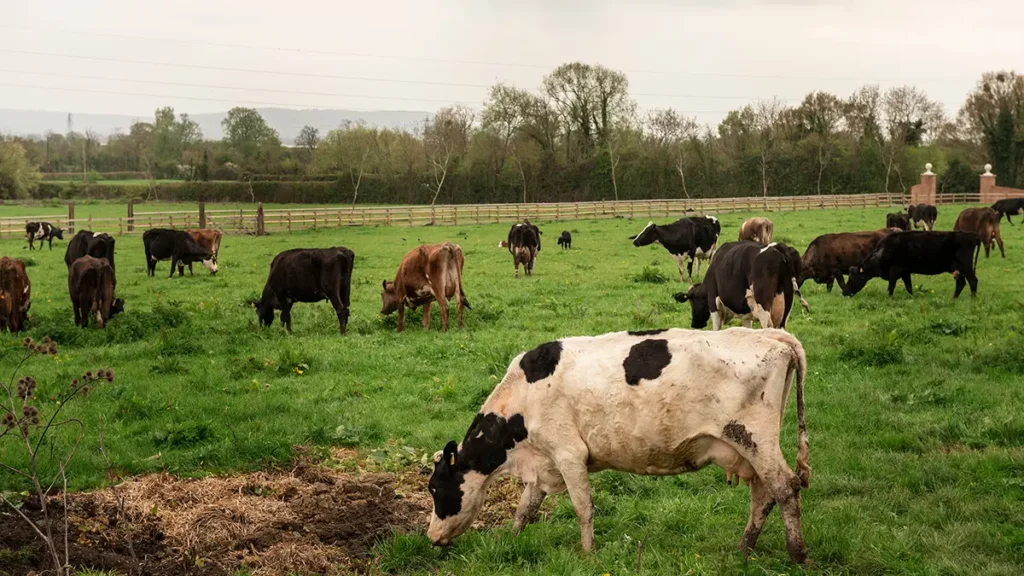
Meat’s Massive Water Footprint
Producing meat uses far more water than growing plant-based foods.
- 1kg of beef = 15,000 litres of water
- 1kg of wheat = 1,500 litres
That’s a tenfold difference. And it doesn’t stop there — the meat industry is also a major contributor to water pollution through runoff from fertilisers, pesticides, and animal waste.
Reducing your meat consumption is a straightforward way to conserve water and reduce pollution in rivers, lakes, and coastal areas.
Ethical Eating: Enjoy Meat More Sustainably
If you love the taste of a Sunday roast or the occasional bacon sandwich, don’t worry — you don’t have to give up meat entirely.
Instead, try these two steps:
- Avoid highly processed meat products
These often come from large-scale operations with poor animal welfare and high environmental costs. They’re also less healthy for you. - Support local, ethical farms
Buy meat from trusted butchers or local farmers. Look for high welfare standards, lower food miles, and sustainable practices. You’ll support your local economy while making a more ethical choice.
A little goes a long way. Even cutting out meat for one or two days a week can make a meaningful difference.
🌱 Key Takeaways
- Eating less meat significantly lowers your carbon footprint.
- It helps protect forests and biodiversity by reducing the need for land conversion.
- It saves enormous quantities of water and reduces pollution.
- You can still enjoy meat by choosing better-quality, ethically sourced options.
- Small changes — like meat-free Mondays — add up to real environmental benefits.
❓ FAQ: Eating Less Meat and the Environment
Q: Do I have to become vegetarian or vegan to make a difference?
No. Even reducing your meat intake by one or two meals a week can lower your environmental impact.
Q: Is chicken better than beef for the environment?
Yes. Beef has a much higher carbon and water footprint than chicken or plant-based options. Swapping red meat for poultry occasionally is still a step in the right direction.
Q: What are some easy meat-free meals I can try?
Try lentil shepherd’s pie, bean chilli, roasted vegetable pasta, or falafel wraps. There are thousands of satisfying, easy recipes online.
Q: Will eating less meat really help climate change?
Yes. Global studies consistently show that reducing meat consumption is one of the most effective personal actions for reducing greenhouse gas emissions.
Final Thought
Can eating less meat positively impact the environment? Absolutely.
It’s one of the simplest, most powerful choices we can make — not only for the climate, but for water conservation, biodiversity, and animal welfare. And the best part? You don’t have to go cold turkey. Just start small and build from there.