
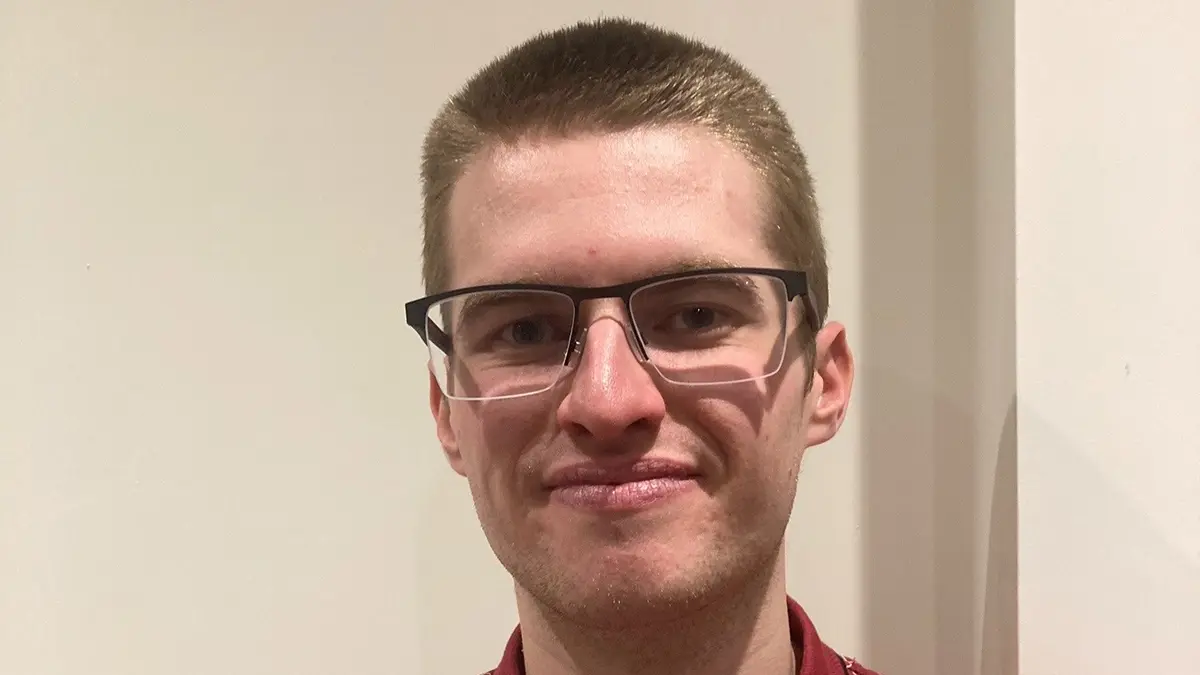

As London marks the 20th anniversary of the London Korean Film Festival (LKFF), director Kim Jong-kwan reflects on the intimate sensibilities behind his latest work and the film chosen to open this landmark edition.
This year, his newest work, Frosted Window, opens the festival, setting the tone for a celebration not just of Korean film, but of the filmmakers who have helped define its intimate, poetic corners beyond global blockbusters and television hits. For Kim, the honour is personal.
“This is the fifth film of mine to be screened in London,” he reflects, recalling earlier screenings of Shades of the Heart and Josée. “London and the LKFF hold a special place in my heart… I feel a connection similar to the word inyeon.” He pauses on the term, a Korean concept of threads of destiny linking people across lifetimes; an idea echoed in Kim’s own gentle cinematic universe.
“The connection I feel with London is similar to that word,” he continued. “I would like to thank the LKFF team for introducing the audience in London to Korean films with deep love for Korean film. I am delighted to have my new work selected as the opening film for such an important occasion.”
Over its two decades, the LKFF has introduced British audiences to everything from arthouse treasure to major studio releases, helping Korean film evolve from a connoisseur’s secret to a vital cultural force. The festival has long championed voices like Kim’s; filmmakers who explore the quiet complexities of emotion, memory, and the everyday beauty of simply being human.
That commitment makes Frosted Window a fitting opener: modest in scale, profound in resonance, and deeply Korean in texture while universal in feeling.
“My new film captures a day in the life of various characters who wander around Seochon, a small area in Seoul,” Kim explains. “The film is about a day in the same space, but I wanted to capture different impressions through different seasons.”
The film unfolds in three vignettes. In Out Walking, an autumn painter searches for connection; in Breather, a summer encounter turns playful and longing; in MARI, winter arrives stark and bare, following an actress negotiating memory and meaning. Lives intersect like drifting snowflakes or fallen leaves; brief touches, human weather.
Kim’s cinema has always moved like a confession overheard, a glance held a second longer. With Frosted Window, he returns to the anthology structure seen in The Table and Shades of the Heart, but with a seasonal elasticity that lets time breathe through space. “I figured capturing stories of such varied aspects would, in turn, capture the overall impression of the space.”
“I wanted to make a film that portrays the characteristics of the seasons and the passing of time,” he continues. “It’s a film that shows a day in the life of various characters, but I hoped the audience could feel the traces the characters have left behind through the seasons that have passed by.”
When asked about his influences and kinship to other filmmakers and artists who inspired the film, Kim professed that “I am heavily influenced by literary works. And whilst I was making this film, I attempted to embody the characteristics of a short novel in the film.”
“Through the portrayal of fleeting moments, I attempted to create a film that prompts the audience to ask different questions and, in turn, understand the incompleteness of humanity. If possible, I’d like to keep creating a collection of novels like this once every year.”
Seochon is one of Seoul’s oldest neighbourhoods tucked beside Gyeongbok Palace. But rather than just a backdrop, but almost a character in the film. “Seochon is a place where traditional small alleys are preserved,” Kim explains, “existing as a part of Seoul but with a different flow of time. Young generations who appreciate its charm gather in the area, and it changes in a way that is distinct from how Seoul generally develops.”
“While it is a place where positive and negative aspects coexist, this very characteristic makes it a source of significant creative inspiration. I wanted to capture the characteristics of this space, which I’ve come to understand through living, walking, and observing, as well as the traits of the people who reside here. Above all, I very much enjoy putting the ordinary, everyday space where I live onto the stage of film.”
This is evident in the elastic tone of the film. Beginning light and conversational in its first two segments, ending stark and introspective with its final, a mirror of the cycles of romance itself. Kim’s direction is characteristically subtle, guided by natural light, quiet performances, and the rhythmic texture of everyday speech. Seochon, with its softly weathered architecture and small intimacies, becomes a silent witness to all of this; a city that holds the ghosts of former lovers and the warmth of new beginnings. In Kim’s hands, Seoul feels not just lived in but remembered.
“I enjoy putting the ordinary, everyday space where I live onto the stage of film,” Kim adds. It’s a kind of poetic urban ethnography: life not dramatised, but observed.
What stays with the director isn’t an image of grandeur but of ephemera: “I find countless coincidences, the climate and the air of the day, the various scenes created by the actors and the space particularly impactful. Like the cigarette smoke Hyun-su exhales in the film, I like fleeting moments being engraved in and remembered through a film.”
That is the tone and atmosphere Kim hopes audiences encounter and preserve in the aftermath of viewing Frosted Window. He explains, “This film is like a prop with a simple composition. But I hope the audience will discover ordinary yet intimate moments of life. We live in different spaces and cultures, but I hope the audience could feel the contemporary emotions, the beauty in the incompleteness, and the universal human senses.
He adds, after a pause, “And I hope they could feel and understand aspects of Korea that are different from those depicted in a lot of other Korean films and shows.”
For a festival celebrating two decades of Korean cinema in London, Frosted Window is a fitting toast: reflective, tender, attuned to the spaces we overlook and the emotions we carry quietly. As winter light skirts Seochon rooftops and London prepares for another season of Korean storytelling, Kim Jong-kwan opens a small window; frosted, perhaps, but warm with life on the other side.