
January arrives with the familiar mix of optimism and pressure. Many of us begin the year determined to overhaul our habits, our homes, and sometimes even our whole lifestyle. By February, real life usually takes over, routines settle back in, and the big resolutions fade away.
The good news is that sustainable living does not require a dramatic transformation. The most meaningful environmental changes come from small, repeatable habits, the simple actions we carry out without much thought but with long-term impact.
This year, instead of trying to reinvent everything at once, consider choosing a few realistic eco-resolutions. These are practical, achievable habits that genuinely stick.
1. Start with a single change
You may have heard the saying, “It is just one bottle, said 8 billion people.” It is a useful reminder that progress begins with something small.
People often imagine sustainable living as a long checklist. In reality, it can begin with refilling just one household product. Shampoo, washing-up liquid, laundry liquid, hand soap. Choose whichever runs out first.
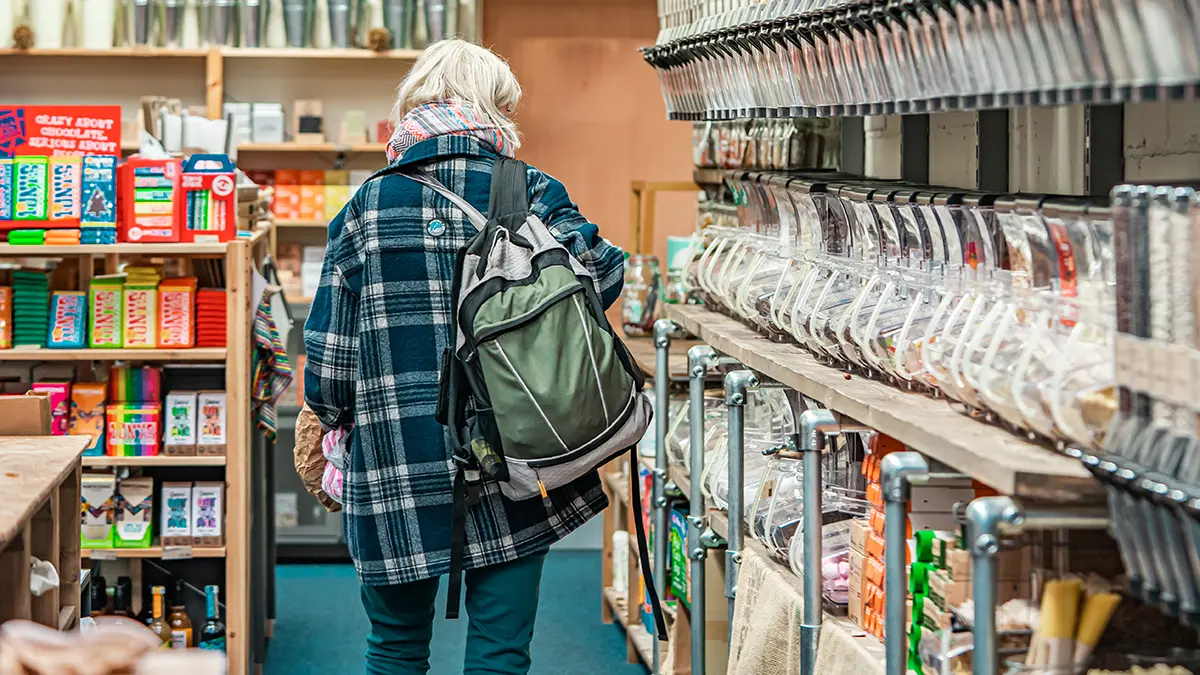
One refill might feel insignificant, but when hundreds of local households each refill a single product, the collective impact becomes enormous. It is also far easier than many people expect. Bring a bottle to your local refill shop or borrow one if you need to. Weigh it, fill it, and pay for the product rather than the packaging. Many household refills are also cheaper than supermarket versions.
Start with one refill. Once it feels normal, adding the next becomes effortless.
2. Buy only what you truly need
You do not need matching jars or an Instagram-ready pantry to be low-waste. In fact, the most sustainable item is always the one you do not buy. Every product, even the eco-friendly ones, carries some form of environmental impact.
One of the simplest and most effective habits is to buy only what you need. Refilling pantry staples such as pasta, rice, lentils, oats, and spices in exact quantities helps prevent overbuying. It reduces clutter and cuts down on forgotten packets at the back of the cupboard.
Trying a new recipe that uses a spice you will only need once or twice? Buy a single teaspoon instead of a whole jar. You save money, reduce food waste and free up cupboard space. Small choices like this add up in a meaningful way.
3. Swap one disposable item for a reusable one
There is no need to replace everything in your home at once. Choose one disposable item you use regularly, such as kitchen roll, cleaning cloths, sandwich bags, or cotton pads, and switch to a reusable version.
These simple swaps pay for themselves quickly. They also stop a constant stream of single-use waste that often goes unnoticed. Once you see how easy the first swap is, it becomes natural to make another.
4. When you slip up, keep going
Everyone forgets their reusable bottle or bags from time to time. Life gets busy, and nobody is perfect. One mistake does not undo your efforts, and it should not be a reason to give up.
Sustainable habits form gradually. Over time, remembering your bottle or packing a bag for life becomes automatic. What matters most is consistency, not perfection.
Small steps create meaningful change
The most sustainable lifestyle is the one you can maintain. Start with one refill. One swap. One new habit. Allow it to settle into your routine, then add another when you are ready.
By next January, you might be surprised by how much you have changed. Gradually, quietly, and without feeling overwhelmed.
At Nothing But Footprints, we are here to make those first steps simple and enjoyable. If you want to begin the year with one small but meaningful change, pop in and say hello, and see how much difference just one bottle can make.