
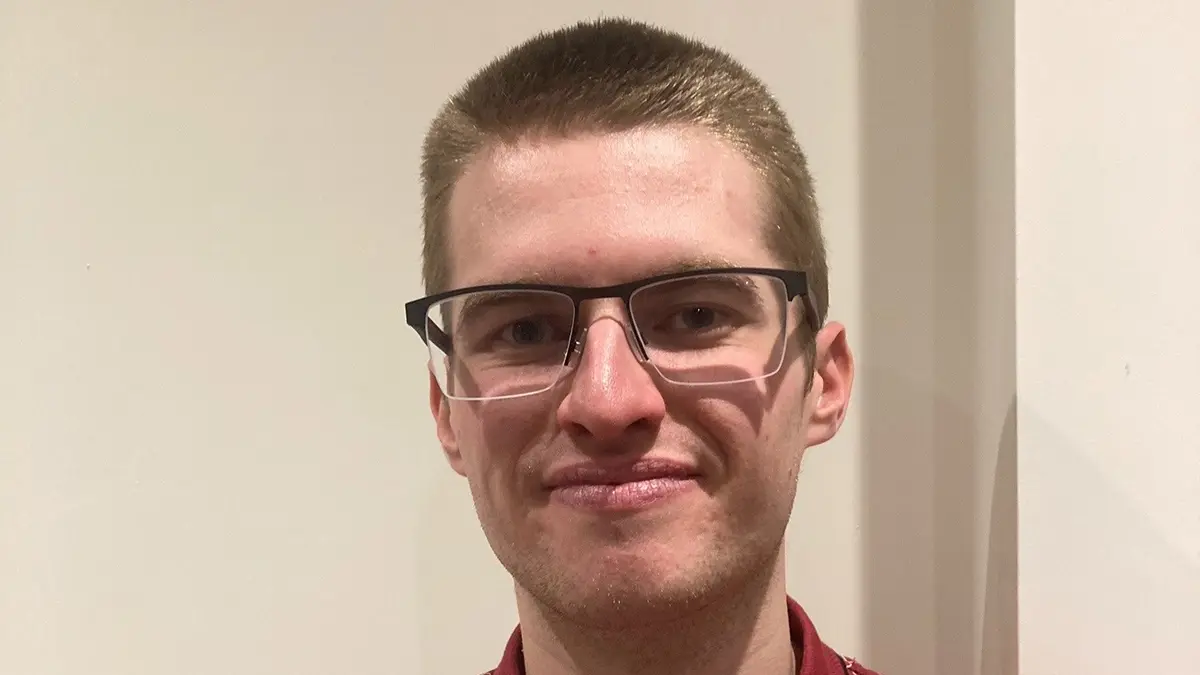

Oscar-nominated filmmaker Pen Densham has spent a lifetime shaping light into emotion. Now, the creative force behind Robin Hood: Prince of Thieves, The Outer Limits, Moll Flanders, and more is bringing that same cinematic intuition to a striking new medium: impressionist nature photography.
When you sit down with Pen Densham, you quickly realise you’re speaking with someone who doesn’t separate art from life. For the Oscar-nominated filmmaker behind Robin Hood: Prince of Thieves, Backdraft, Moll Flanders, and Harriet, creativity is less a career than a way of perceiving the world. It is a constant search for emotional truth, whether through cinema or still photography; as he states, “Cameras seemed like magician’s instruments, and I yearned to cast spells with them.”
Now, Densham is channelling decades of cinematic storytelling into impressionist nature photography, where luminous, abstract works feel less like documentation and more like sensation. Qualia, the title of his photography collection, refers to the philosophical term for sensations that cannot easily be put into words. As such, images aren’t meant to explain nature, but rather to be felt. Rippling water becomes a field of motion. Reflections fracture into dreamlike patterns. A plant dissolves into spirals of colour. Looking at them feels closer to remembering a dream than observing a scene.

But his journey into image-making began long before Hollywood, in childhood moments that feel mythic as he describes them. “My father and his identical twin brother were cameramen making documentaries,” he tells me. “They couldn’t afford babysitters, so they took four-year-old me with them. I got to see them making movies.”
One of those early productions involved Densham riding a live alligator, an experience that sounds surreal even by cinematic standards. Yet what stayed with him wasn’t the spectacle; it was the magic of the camera itself. “Cameras seemed like magician’s instruments,” he says. “And I yearned to cast spells with them.”
He recalls visiting Anglo-Amalgamated Productions in London as a child, meeting studio co-founders Nat Cohen and Stuart Levy while watching his father’s work being screened. “That was the enormity and sense of transport from the regular world into this other world,” he says. “And I just wanted to be part of that.”
By 15, Densham had left school and begun selling photographs professionally, an audacious move that soon paid off when he photographed the Rolling Stones for the BBC. At 16, he wrote a provocative article for a national photography magazine titled Go Shoot Yourself, featuring mirrored self-portraits. Even then, motifs that define his current work (reflection, water, and perception) were emerging.
At 19, he emigrated to Canada, expanding into filmmaking and co-founding what would become Trilogy Entertainment Group with editor John Watson. Their visually driven films earned more than 60 international awards, including two Oscar nominations, eventually leading Densham to Hollywood.
Projects like Backdraft, Blown Away, Houdini, and his Oscar-nominated Harriet are among his library. However, his breakout success, Robin Hood: Prince of Thieves (1991), remains a cultural touchstone, largely from the commercial success of Bryan Adams’ song, ‘Everything I Do’, and the scene-stealing villainous performance from Alan Rickman.
“They were making loads of movies about killing people,” he says, referring to the dominance of Schwarzenegger and Stallone action movies. “I wanted to make a story about the makers of life as opposed to the takers of life; a story about people fighting for their loved ones.”
That intention shaped every creative decision. Rather than portraying Robin as a mythic, untouchable hero, Densham envisioned a figure defined by growth and vulnerability. “I wanted him to be human,” he explains. “Someone who starts as a rich, spoiled son of an aristocracy and comes to realise what really matters.”

This grounding of legend in emotional reality, where it was less spectacle, more of human connection. It also extended to the film’s most forward-looking creative choices. The inclusion of Morgan Freeman as Azeem (an Arabic warrior who becomes Robin’s ally despite the Crusade setting) introduced themes of cultural respect and shared humanity rarely foregrounded in cinema at the time.
That through-line becomes clearer when he describes his current work. His impressionistic images of water, reflection, and movement are not exercises in abstraction for their own sake. They are attempts to tap into something elemental; a visual language rooted in instinct, emotion, and shared experience.
When discussing his years in photography, Densham confessed he struggled with it. “I took excellent pictures, I was never able to take any that blew me away […], and I think we have been conditioned to replicate what is considered to be appropriate. And those things are sort of in boxes: what is an appropriate sunset, the right colours and balance?”
“We [human beings] are extraordinary creatures,” he reflects. “Across our millions of years of evolution, we have certain things such as aesthetics, but what are aesthetics?”
“The way we respond to flow,” he adds, “to pattern, to light; that’s built into us. Those instincts are ancient, and they’re part of how we experience being alive.”
The breakthrough came unexpectedly when watching his teenage daughter experiment freely with one of his “disused Nikons”, Densham saw a form of expression unburdened by rules. “Her images made no graphic sense,” he says, laughing. “But they were poetic. No one had told her what was correct, so she wasn’t trying to get it right.”

That moment essentially reframed photography into two modes for Pen: “There’s photography where you’re trying to get it right,” he explains. “And then there’s photography, where you ask, ‘What if?’ What if a plant becomes spirals of colour? What if the reflection is the subject?”
In that sense, Densham’s photography echoes the same philosophy that guided his filmmaking: an insistence on finding the living core inside familiar forms. Just as his Robin Hood sought to humanise a legend and shift the emotional centre of an action film, his photographs aim to reframe how we see nature.
He explained the intent behind Qualia was to abandon internal judgment to reach something new. “You always have that voice telling you you’re doing it wrong,” he says. “It’s trying to protect you. But you can’t judge something while you’re creating it. If you listen to that voice, you’ll never discover anything.”
“I’m painting with a camera,” he says. “The more I go forward, the more abstract it becomes.”
Despite decades of success in another medium, he speaks less about achievement than discovery. “I have this instinct that I’m going to keep finding new things,” he says. “And I don’t know what they are yet.”
In many ways, Qualia serves as both a milestone and an invitation: a record of an artist rediscovering freedom, and a reminder that perception itself can be an art form. Through reflections, colour, and motion, Densham asks viewers to slow down and notice the subtle vibrations that shape how we experience the world.
Sitting with him, it’s clear that the child who once watched cameras transform ordinary spaces into something magical is still present. The tools have changed, the medium has shifted, but the intention remains the same: to cast spells with light.