
A septic tank is one of those systems most property owners rarely think about until something goes wrong. When it does, the consequences can be unpleasant, costly, and in some cases, harmful to your property and the surrounding environment.
At Wessex Pumps and Pipework, we work with homeowners, landowners, and businesses across Oxfordshire, Wiltshire and the Cotswolds who are dealing with failing or outdated septic systems. In many cases, the warning signs were there long before the issue became urgent.
Understanding what to look for can help you act early, avoid disruption and ensure your wastewater system remains compliant, efficient and reliable.
Why Septic Tank Upgrades Matter
Septic systems installed decades ago were not designed to meet modern environmental standards or the demands of today’s households. Increased water usage, regulatory changes and natural system wear all contribute to the need for upgrades.
In England, the General Binding Rules mean that many older septic tanks that discharge directly into watercourses are no longer compliant. If your system falls into this category, upgrading is not optional.
Working with specialists such as Wessex Pumps and Pipework ensures your system is assessed correctly and brought up to standard with a solution that suits your property.
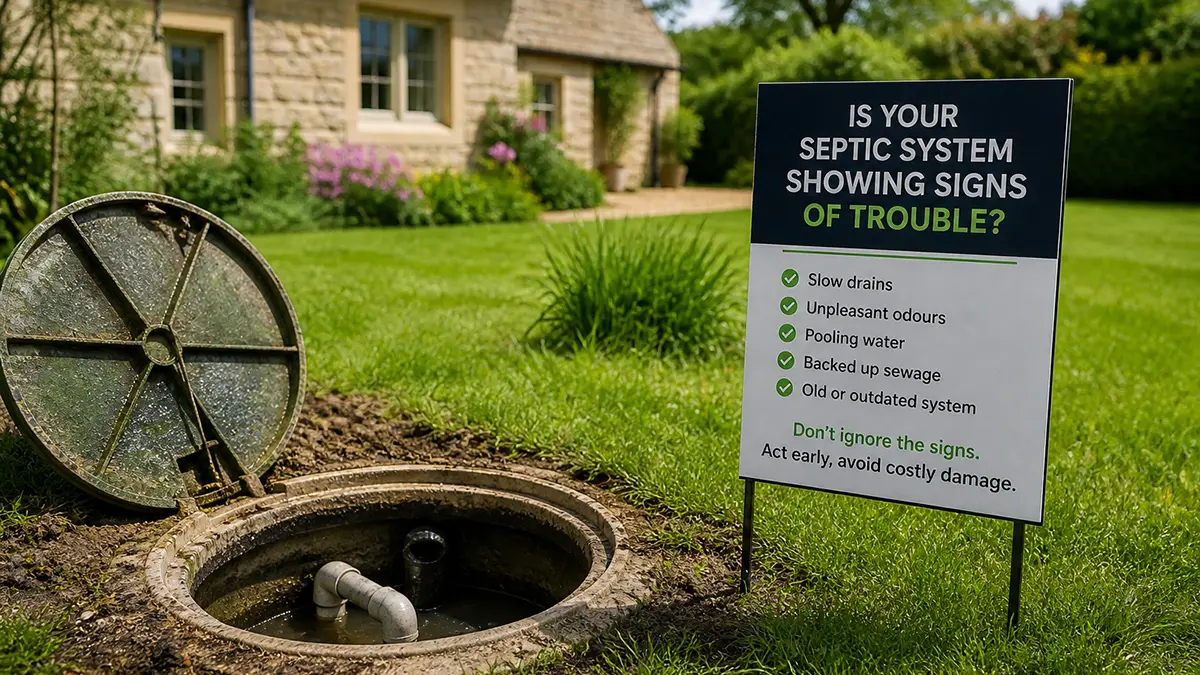
1. Slow Drains Throughout the Property
One of the earliest signs of a septic issue is slow drainage.
If sinks, showers, and toilets are all draining more slowly than usual, it often points to a system that is struggling to process wastewater efficiently. While a single slow drain may be a local blockage, multiple slow drains usually indicate a wider issue within the septic system.
This can be caused by:
- A full or overloaded tank
- Blocked or failing pipework
- Drainage field saturation
- Poor system design for current usage
If left unresolved, this issue can escalate into backups inside the property.
2. Unpleasant Odours Around Your Property
A well-functioning septic system should operate without noticeable smells.
If you begin to detect persistent sewage odours near your tank, drains, or garden areas, it is a clear sign something is wrong. These smells often indicate that waste is not being properly contained or processed.
Common causes include:
- Cracks or leaks in the tank
- Failing seals or pipe connections
- Overfilled tanks
- Inefficient treatment processes
Odours are not just unpleasant. They are a warning that your system may be releasing untreated waste into the surrounding environment.
3. Pooling Water or Soggy Ground
If you notice wet patches, pooling water, or unusually lush grass around your septic tank or drainage field, this is a serious red flag.
This usually means wastewater is not being absorbed or treated correctly and is surfacing instead.
This can be caused by:
- A saturated or failed soakaway
- Blocked drainage pipes
- Tank overflow
- Poor soil conditions or outdated system design
At this stage, professional intervention is essential. Continuing to use the system without addressing the issue can lead to contamination of land and nearby water sources.
4. Frequent Backups Inside the Property
Sewage backing up into toilets, sinks, or drains is one of the most obvious signs of a failing system.
This is not just inconvenient. It is a health risk and often indicates that the system has reached capacity or is no longer functioning correctly.
Recurring backups suggest:
- The tank is undersized for your property
- Internal components have failed
- The system is no longer fit for purpose
In many cases, repeated callouts for blockages are a sign that replacement is more cost-effective than ongoing repairs.
5. Your System Is Over 20 to 30 Years Old
Age is one of the biggest factors in septic system performance.
Many older systems were installed using materials and designs that are now outdated. Even if they appear to be working, they may not meet current regulations or handle modern water usage levels.
Older systems are more prone to:
- Structural failure
- Inefficient waste treatment
- Environmental non-compliance
If your septic tank is more than 20 to 30 years old, it is worth having it assessed by a specialist team such as Wessex Pumps.
6. Increased Household or Property Usage
Changes in how a property is used can put additional strain on a septic system.
Examples include:
- Home extensions
- Additional bathrooms
- Conversion to multi-occupancy use
- Increased commercial or agricultural activity
If your system was designed for a smaller load, it may no longer cope with demand. This often leads to gradual performance issues that worsen over time.
Upgrading to a modern system ensures capacity matches usage.
7. Failing Drainage Field or Soakaway
The drainage field is a critical part of any septic system. It allows treated wastewater to safely disperse into the ground.
When it fails, the entire system is compromised.
Signs of failure include:
- Persistent wet or boggy areas
- Strong odours
- Poor drainage
- Surface contamination
In many cases, repairing the drainage field alone is not sufficient. A full system upgrade may be required, including modern attenuation or soakaway solutions.
8. Non-Compliance with Environmental Regulations
One of the most common reasons for septic upgrades today is regulatory compliance.
If your system discharges directly into a stream, ditch, or river, it is likely no longer compliant with current UK regulations.
Failure to upgrade can result in:
- Legal enforcement
- Fines or penalties
- Issues when selling your property
Modern sewage treatment plants offer a compliant and environmentally responsible alternative.
Wessex Pumps specialise in the supply and installation of fully compliant systems, ensuring your property meets all current standards.
9. Rising Maintenance Costs
If you find yourself frequently paying for:
- Tank emptying
- Emergency callouts
- Repairs to pumps or pipework
It may be more cost-effective to replace the system entirely.
Older systems often become increasingly expensive to maintain, with no guarantee of long-term reliability.
A new installation provides:
- Improved efficiency
- Lower maintenance costs
- Greater reliability
- Peace of mind
10. Contaminated Water or Health Concerns
In severe cases, a failing septic system can contaminate groundwater or nearby water supplies.
This is particularly important for properties using boreholes or private water systems.
Signs include:
- Changes in water quality
- Unusual tastes or odours
- Failed water tests
Upgrade vs Replacement: What Is the Difference?
Not every system needs full replacement. In some cases, targeted upgrades can restore performance.
Upgrade Options
- Installing a modern treatment unit alongside an existing tank
- Improving drainage fields or soakaways
- Adding pump stations
- Upgrading pipework and controls
Full Replacement
Required when:
- The tank is structurally unsound
- The system is non-compliant
- Capacity is insufficient
- The drainage field has failed completely
A professional assessment will determine the most appropriate solution.
The Benefits of Upgrading Your Septic System
Upgrading is not just about fixing problems. It offers long-term advantages.
Improved Efficiency
Modern systems treat wastewater more effectively, reducing environmental impact.
Compliance with Regulations
Avoid legal issues and ensure your property meets current standards.
Increased Property Value
A compliant, well-installed system is a strong selling point.
Reduced Maintenance
New systems are designed for reliability and lower ongoing costs.
Environmental Protection
Protect your land, water sources, and surrounding environment.
Why Choose Wessex Pumps and Pipework
At Wessex Pumps and Pipework, we deliver complete wastewater solutions tailored to each property.
Our services include:
- Septic tank upgrades and replacements
- Sewage treatment plant installation
- Pumping stations and drainage systems
- Groundworks and full project management
- Ongoing servicing and maintenance
We handle everything from initial assessment through to installation and finishing/landscaping works, ensuring a seamless process from start to finish.
Our team works with precision and care, delivering systems designed for long-term performance.
For expert advice or to arrange a site visit, contact Wessex Pumps today.
When to Take Action
If you recognise any of the signs outlined in this guide, it is important to act early.
Delaying can lead to:
- Increased repair costs
- Property damage
- Environmental risks
- Compliance issues
A professional inspection will give you clarity on the condition of your system and the best course of action.
Final Thoughts
A failing septic tank rarely happens overnight. The warning signs are usually there, but often overlooked until the issue becomes urgent.
By understanding what to look for and working with experienced specialists, you can address problems early, protect your property, and ensure your system is fit for the future.
Wessex Pumps and Pipework provide expert guidance, high-quality installations, and reliable ongoing support across every stage of your wastewater system.
If you are unsure about the condition of your septic tank, now is the time to have it checked.
Visit our website: www.wessexpumps.com
Or give us a call: 01993 870470