
A lot of people think small businesses grow because of one big moment.
They imagine one advert, one social media post, or one special offer suddenly changing everything.
But in real life, small businesses usually grow in a much slower and steadier way.
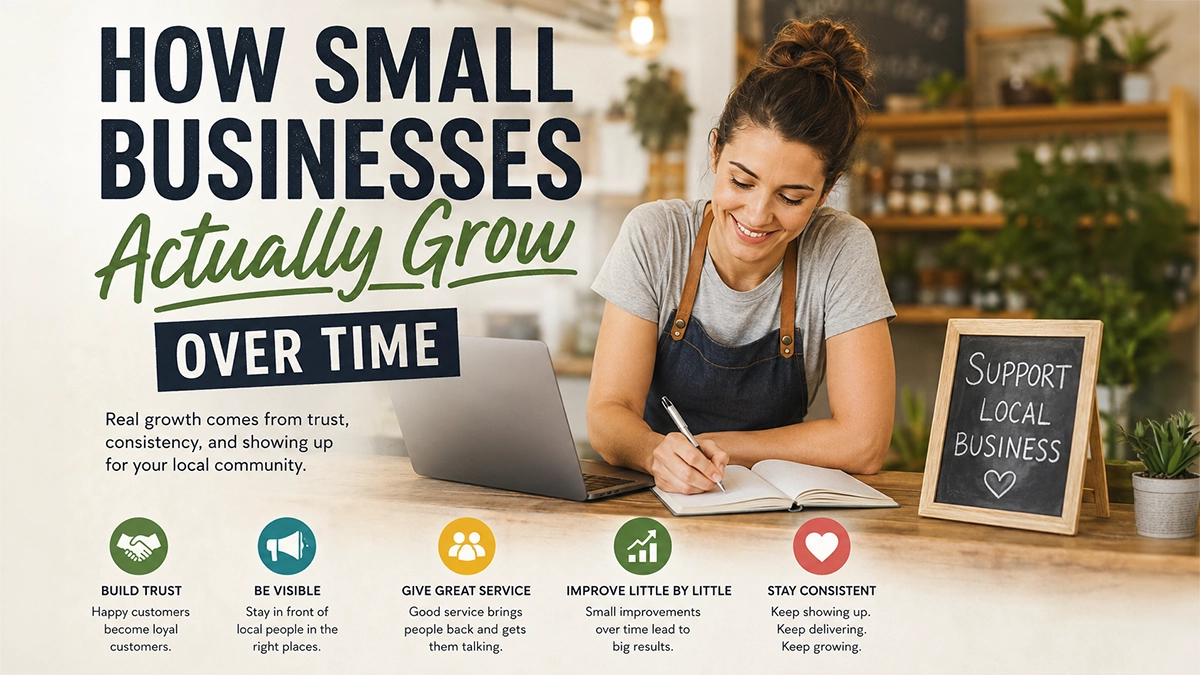
Growth comes from being seen often, doing a good job, building trust, and giving people a reason to come back. It is not about luck. It is about repeating the right things over time.
For local businesses, this matters even more. People often choose businesses they recognise, trust, and remember.
Small Business Growth Usually Starts Slowly
Most small businesses do not become successful straight away.
At the beginning, a business may only have a few customers. The owner might be doing most of the work themselves. Money can be tight, and every enquiry matters.
This stage can feel frustrating, but it is also where the foundations are built.
A small business needs to work out:
- Who its customers are
- What problem it solves
- Why people should choose it
- How to price its services
- How to deliver a good customer experience
- How to get noticed locally
This early stage is not always glamorous, but it is important. A business that builds strong foundations has a much better chance of growing later.
Growth Comes From Being Trusted
Trust is one of the biggest reasons people choose a small business.
This is especially true for local service providers, trades, shops, restaurants, beauty businesses, health businesses, and professional services.
People want to know they are making a safe choice.
They may ask themselves:
“Will this business do a good job?”
“Can I rely on them?”
“Are they professional?”
“Have other people used them before?”
Trust grows when a business keeps showing up and doing what it says it will do.
This can happen through good reviews, word of mouth, clear communication, helpful content, local advertising, and consistent branding.
The more familiar a business becomes, the easier it is for people to trust it.
Visibility Matters More Than Many Businesses Realise
A business cannot grow if people do not know it exists.
This sounds obvious, but many small businesses rely too much on hope. They hope people will find their website. They hope customers will recommend them. They hope their social media posts will be seen.
Hope is not a marketing plan.
Small businesses need regular visibility.
That means being seen in places where local people already look, read, scroll, search, and pay attention.
This might include:
- A clear website
- Google Business Profile
- Local SEO
- Social media
- Email marketing
- Local magazines
- Community events
- Printed advertising
- Customer referrals
- Local partnerships
The key is repetition.
People often need to see a business several times before they remember it. They may not need that product or service today, but they might need it next month.
When the time comes, the business they remember has a better chance of being chosen.

Consistency Beats Short Bursts of Effort
Many small businesses make the mistake of only marketing when things go quiet.
They get busy, stop promoting themselves, then panic when enquiries slow down.
This creates an up-and-down cycle.
A better approach is to keep marketing consistently, even when the business is busy.
This does not mean spending huge amounts of money every week. It means keeping the business visible and active.
For example:
- Posting useful content regularly
- Keeping the website updated
- Asking happy customers for reviews
- Advertising in trusted local places
- Sending useful emails
- Sharing customer stories
- Promoting seasonal services early
Small actions, repeated often, create momentum.
It is like filling a bucket one cup at a time. One cup may not look like much, but over time, the bucket fills.
Good Service Creates Repeat Customers
Growth is not only about finding new customers.
It is also about keeping the customers you already have.
A repeat customer is very valuable because they already know the business. They are easier to sell to again because trust already exists.
Good service makes people more likely to return.
This includes:
- Turning up on time
- Replying quickly
- Being polite
- Being honest about prices
- Solving problems properly
- Making the customer feel valued
- Following up after the job or sale
People remember how a business made them feel.
If the experience is smooth, helpful, and professional, they are more likely to come back. They are also more likely to recommend the business to others.
Word of Mouth Still Matters
Word of mouth is one of the oldest forms of marketing, and it is still powerful.
When someone recommends a business to a friend, family member, neighbour, or colleague, that recommendation carries trust.
But word of mouth does not happen by accident.
People recommend businesses when they have had a good experience and can easily remember the name.
That is why branding and visibility matter.
If someone says, “I know a great plumber,” but cannot remember the business name, the opportunity may be lost.
A business needs to be easy to remember, easy to find, and easy to contact.
Small Improvements Add Up
Business growth is not always one big leap.
Often, it comes from lots of small improvements.
A business might improve its website. Then it might get more reviews. Then it might update its advert. Then it might answer enquiries faster. Then it might introduce a better offer. Then it might build a stronger local reputation.
Each improvement helps a little.
Over time, these improvements can make a big difference.
This is why successful businesses keep reviewing what they do. They do not wait for things to go wrong. They look for ways to get better.
Small improvements could include:
- Making contact details easier to find
- Adding better photos
- Explaining services more clearly
- Improving headlines in adverts
- Asking for more reviews
- Following up with old customers
- Creating clearer offers
- Making booking easier
- Improving customer service
None of these actions may change everything overnight. But together, they help the business become stronger.
Growth Often Comes in Stages
Small businesses usually grow in stages.
The first stage is survival. The business needs enough customers to keep going.
The second stage is stability. The business has regular work, better systems, and more confidence.
The third stage is growth. The business starts attracting more customers, improving profits, and possibly expanding.
The fourth stage is maturity. The business is known, trusted, and established.
Not every business wants to become huge. For many local business owners, success means having steady customers, reliable income, good reputation, and control over their time.
Growth should match the goals of the owner.
A small business does not have to become a national brand to be successful. It can be strong, profitable, and respected in its local area.
Local Reputation Is a Long-Term Asset
For a local business, reputation is one of the most valuable things it owns.
A strong local reputation makes marketing easier. People are more likely to respond when they already recognise the name.
This is why businesses should protect their reputation carefully.
That means being honest, reliable, and professional, even when things are difficult.
Mistakes can happen in any business. What matters is how they are handled.
A business that deals with problems properly can often build even more trust.
Marketing Should Build Memory
Good marketing does not just try to get a sale today.
It also helps people remember the business for later.
This is important because many customers are not ready to buy the first time they see an advert or post.
For example, someone may see an advert for a new kitchen company but not need a kitchen yet. Six months later, they decide to renovate their home. If they remember the business, that earlier advert has done its job.
This is how local visibility works.
The aim is to stay present in people’s minds so that when they need the service, they think of that business first.

The Businesses That Grow Are Usually the Ones That Keep Going
One of the biggest secrets of small business growth is persistence.
Many businesses give up too quickly on marketing. They try something once, do not see instant results, and stop.
But growth takes time.
A strong business keeps showing up. It keeps improving. It keeps serving customers well. It keeps building trust.
Over time, this creates a powerful effect.
More people recognise the business. More people trust it. More people recommend it. More people come back.
That is how small businesses actually grow.
Not all at once.
Not by magic.
But step by step.
Final Thoughts
Small business growth is not usually fast or dramatic.
It is built through trust, visibility, consistency, good service, repeat customers, and small improvements over time.
For local businesses, the goal is simple: be seen, be remembered, and be trusted.
When people know who you are, understand what you offer, and believe you can help them, your business has a much stronger chance of growing.
Growth is not about doing one thing perfectly.
It is about doing the right things often enough for people to notice, remember, and choose you.
Want more practical business advice like this?
If you enjoy our business advice and want to receive an email each time we publish, leave us your details below.
FAQ
How do small businesses grow?
Small businesses grow by attracting customers, building trust, delivering good service, and staying visible over time. Growth usually happens step by step rather than all at once.
Why is visibility important for small businesses?
Visibility matters because people cannot buy from a business they do not know about. The more often people see and remember a business, the more likely they are to choose it when they need that product or service.
Is word of mouth enough to grow a business?
Word of mouth is useful, but it should not be the only marketing method. A business also needs clear branding, local visibility, good reviews, and regular marketing to support growth.
How long does it take for a small business to grow?
There is no exact timeline. Some businesses grow quickly, while others take years. Growth depends on the market, service quality, pricing, visibility, customer demand, and consistency.
What is the best way to grow a local business?
The best way is to combine good service with regular local marketing. A local business needs to be easy to find, easy to trust, and easy to remember.